Oct 23, 2026
From Kalawana Alluvial Sapphire Rough to Three Custom-Cut Ceylon Sapphires
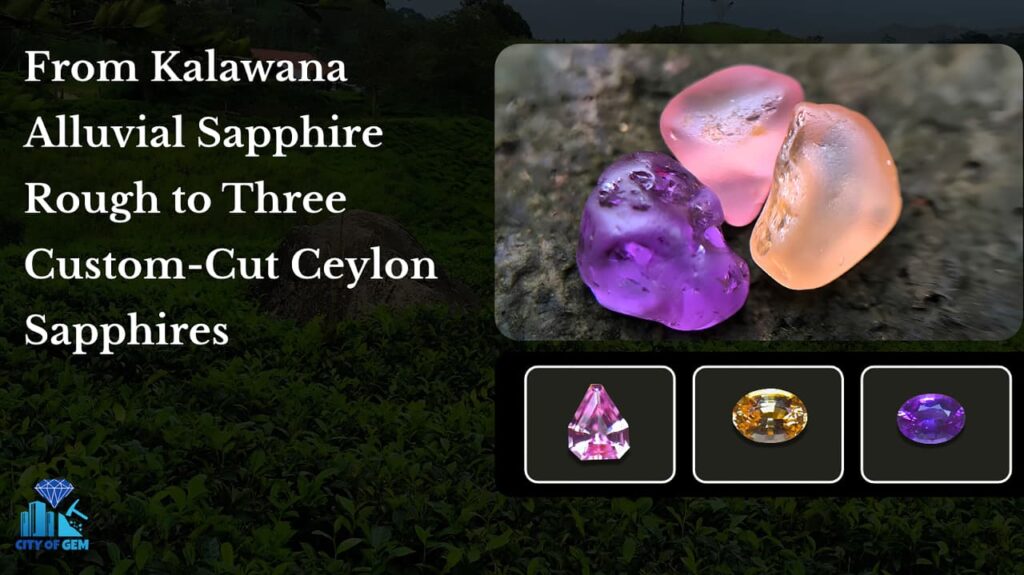
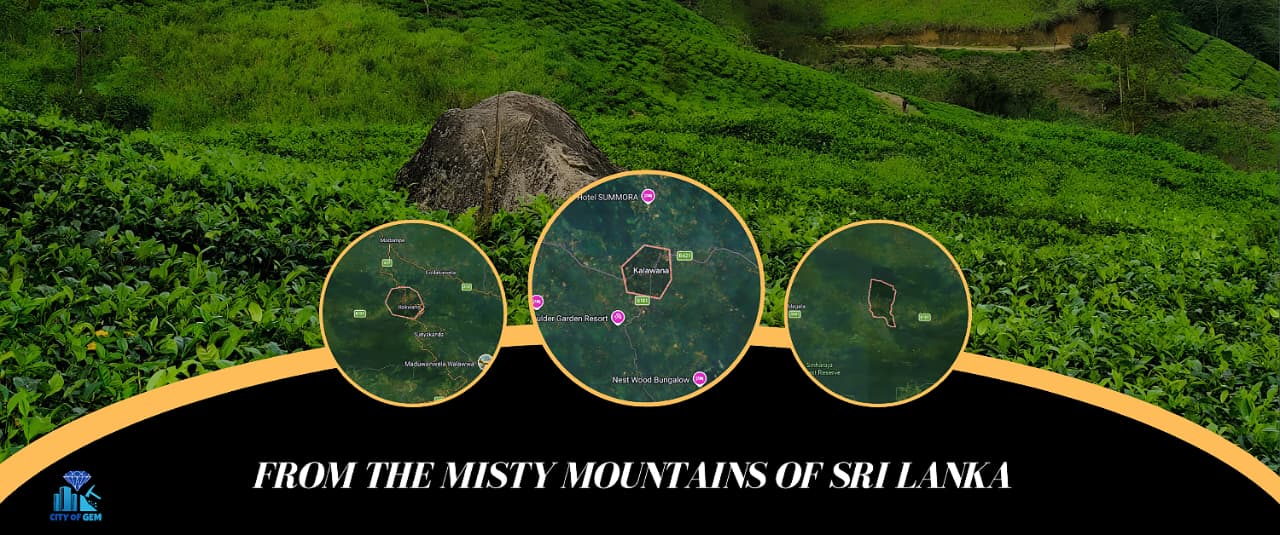
Some gemstone journeys begin in a showroom. Others begin unexpectedly on a mountain road in Sri Lanka. This City of Gem project started while we were travelling with our German customer through the misty mountain region around Rakwana, on the way toward Rambuka. Along the route, we met a well-known mining-area contact from whom we have sourced gemstones before. He had brought several naturally worn alluvial sapphire rough stones from Kalawana village around mining in Sri Lanka, and their colors immediately caught our attention.
The three sapphires looked almost like naturally polished pebbles in his hand. One showed a rich purple body color, while the other two displayed attractive fancy sapphire colors: one predominantly orange and the other an orangish-pink to pink appearance. Because terms such as Padparadscha require careful color assessment and, for commercial representation, ideally appropriate laboratory confirmation, we describe these pieces according to their observable colors rather than making an unsupported Padparadscha determination.
Kalawana and the surrounding gem-bearing areas are part of Sri Lanka’s wider alluvial gemstone landscape, where sapphire crystals can travel through weathering and sedimentary processes before eventually being recovered from gem-bearing gravels. This natural movement can soften sharp crystal edges and create the rounded pebble-like forms seen in these three pieces.
We didn’t negotiate the price. He offered us a fair price that worked well for both sides, so we purchased the parcel from him during the journey. Shortly afterward, we showed the rough sapphires to one of our customers in the Netherlands. He liked the colors and natural forms and decided to purchase them as a custom gemstone cutting project rather than buying already-finished stones.
The starting weights were 1.60 ct for the orange sapphire, 1.50 ct for the orangish-pink sapphire, and 1.15 ct for the purple sapphire, giving a combined rough weight of 4.25 ct.
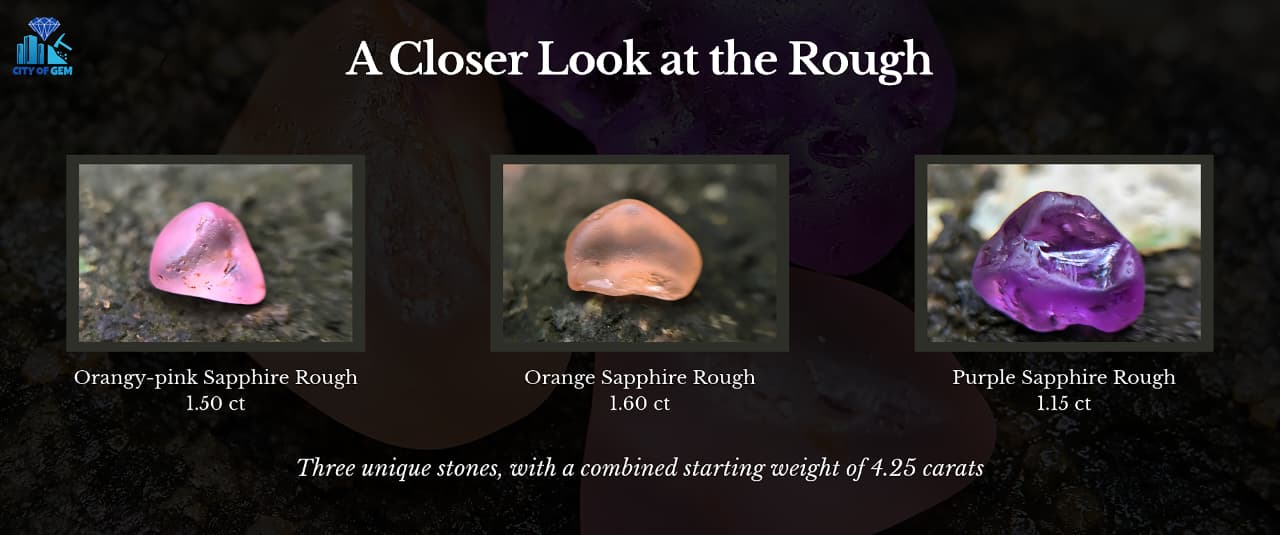
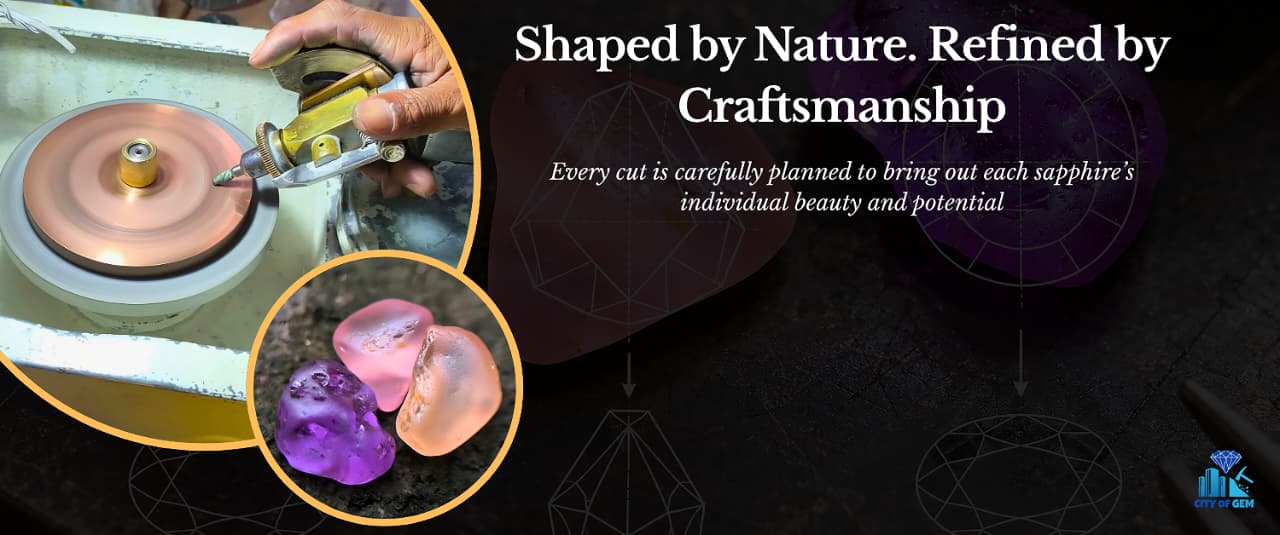
Although these were relatively small rough stones, each had useful cutting potential. Their naturally rounded alluvial forms also influenced our planning. Instead of forcing all three sapphires into standard commercial shapes, we studied the usable areas, internal characteristics, color distribution, depth and natural outline of each piece. The goal was to achieve attractive face-up appearance and practical proportions while retaining as much useful material as the individual rough allowed.
The Netherlands customer also has an appreciation for unusual gemstone shapes, which gave us more freedom during the design process. Two stones could be developed into distinctive oval-style forms that followed the original rough reasonably well. For the third stone, preserving a conventional oval would have required compromises in either weight, internal cleanliness or proportion, so we chose a more individual shield-inspired geometric custom cut.
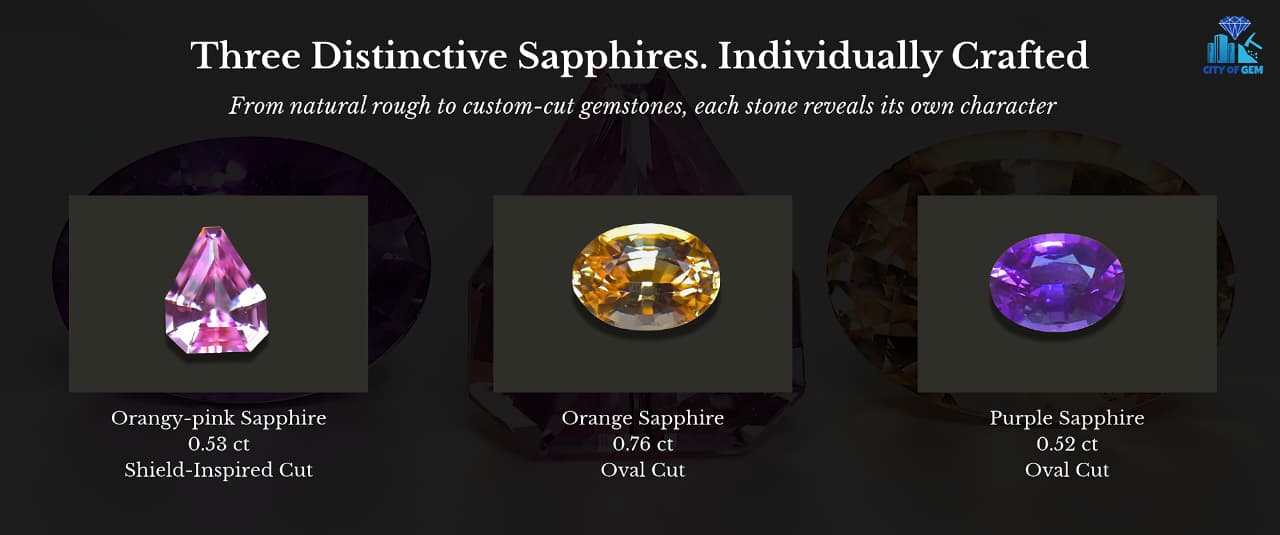
This is one of the main advantages of custom cutting directly from rough. The cutting plan does not have to begin with the question, “How do we force this stone into a standard oval?” Instead, we can ask, “What finished design best suits this particular piece of natural sapphire?”
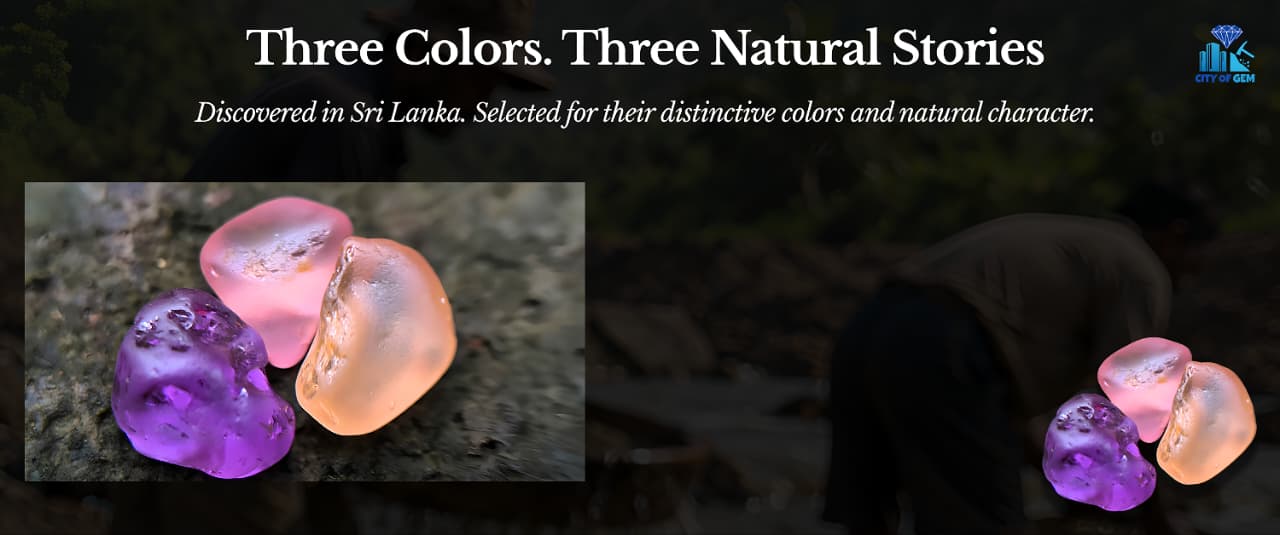
During preforming, material was removed where necessary to establish a stable outline and work around surface irregularities and internal features. The stones were then faceted and polished with attention to symmetry, light return, face-up color and overall balance. With natural rough, weight retention is important, but maximum weight is not always the best result. A heavier finished stone with poor proportions or badly positioned inclusions may be less attractive than a slightly lighter stone that shows better color and a more refined appearance.
After cutting, the 1.60 ct orange sapphire finished at 0.76 ct, giving approximately 47.5% weight recovery. The 1.50 ct pink to orangish-pink sapphire finished at 0.53 ct, giving approximately 35.3% recovery. The 1.15 ct purple sapphire finished at 0.52 ct, giving approximately 45.2% recovery.
Together, the original 4.25 ct of natural Ceylon sapphire rough produced 1.81 ct of finished gemstones, representing an overall cutting recovery of approximately 42.6%.
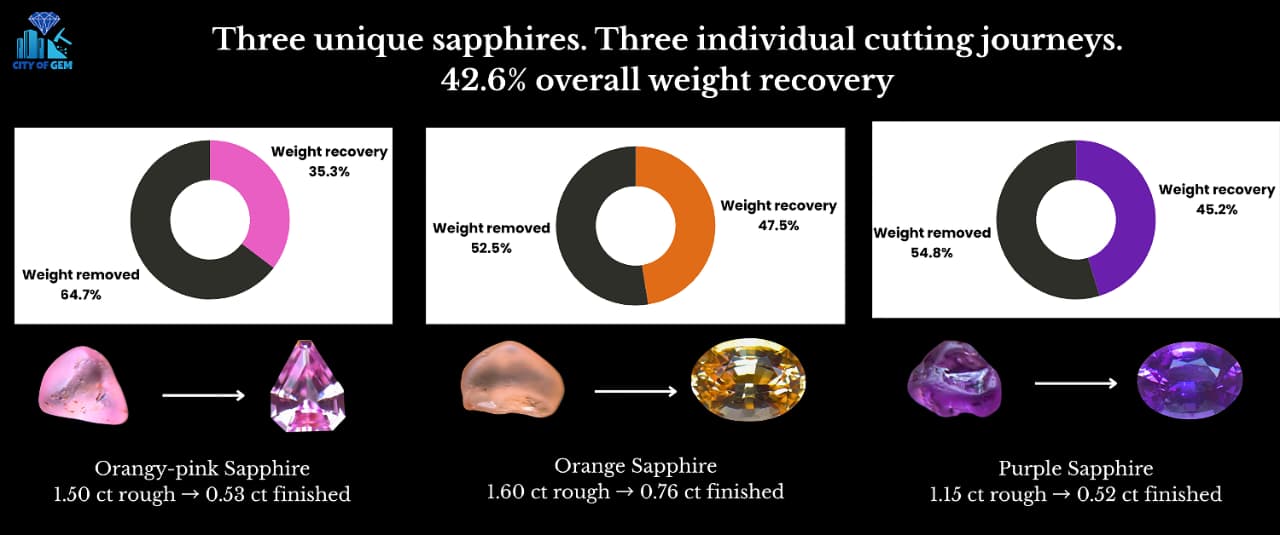
The recovery figures also illustrate why gemstone cutting cannot be judged only by retained carat weight. Each sapphire had a different natural shape, depth and internal structure. The cutter therefore had to make different decisions for each stone. The purpose was not to achieve identical percentages but to produce three individual gemstones with good proportions and attractive presentation.
The final result is a colorful trio of natural Sri Lankan sapphires: a bright orange gemstone, a delicate pink-toned gemstone and a vivid purple sapphire. Their finished shapes retain a sense of individuality rather than looking like three stones produced from a standardized manufacturing process. That character is exactly what made the project interesting from the beginning.
For City of Gem, the story behind these stones is also important. We did not purchase finished gemstones from a wholesale catalogue and simply resell them. We encountered the rough while travelling through Sri Lanka’s gemstone-producing region, purchased it through an established source-area relationship, showed it directly to an international customer, planned each stone individually and completed the custom cutting in Sri Lanka.
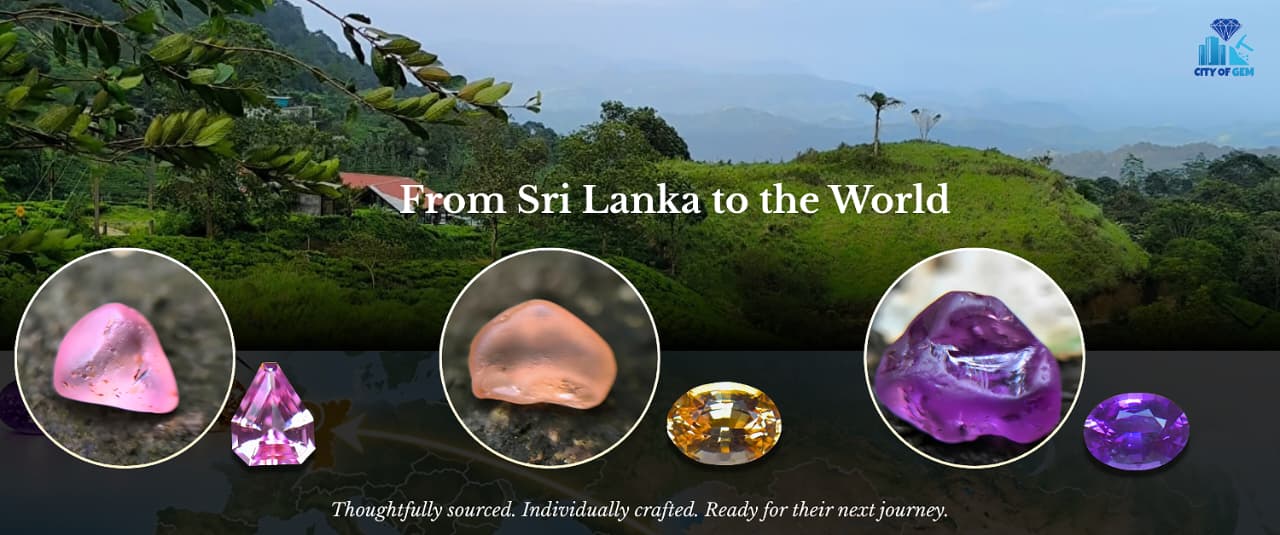
That creates a different connection between the customer and the gemstone. The journey can be followed from the source-area rough, through cutting decisions and weight recovery, to the finished stone that eventually reaches the customer’s hand.
Many international buyers search for natural Ceylon sapphires, Sri Lankan sapphire rough, custom gemstone cutting, direct gemstone sourcing, unusual sapphire colors and rough-to-finished gemstone services. Our approach combines these elements in one process. Depending on the customer’s requirement, City of Gem can assist with sourcing suitable rough, studying its cutting potential, discussing possible shapes, completing the cutting and polishing, arranging certification when requested, and preparing the finished gemstones for international shipping.
These three sapphires are now completed and ready for shipment to the Netherlands, but their story began far away from a jewellery counter: on a road through the misty mountains of Sri Lanka, with three small colorful pebbles in the hand of a local source contact.
That is the difference we want customers to experience with City of Gem — from Sri Lankan gemstone sources, through thoughtful custom cutting, directly toward the finished gemstone in your hand.
Frequently Asked Questions
The three natural sapphire rough stones were sourced from Kalawana village around mining in Sri Lanka through one of our established source-area contacts.
The orange sapphire weighed 1.60 ct, the orangish-pink sapphire weighed 1.50 ct, and the purple sapphire weighed 1.15 ct. Their combined rough weight was 4.25 ct.
After custom cutting, the orange sapphire finished at 0.76 ct, the pink sapphire at 0.53 ct, and the purple sapphire at 0.52 ct, for a combined finished weight of 1.81 ct.
The combined weight recovery was approximately 42.6%. Individual recovery was approximately 47.5% for the orange sapphire, 35.3% for the pink sapphire and 45.2% for the purple sapphire.
Each rough sapphire had a different natural outline, depth and internal structure. Rather than forcing every stone into the same commercial shape, the cutting designs were adapted to the individual rough. Two developed toward oval-style forms, while another was suited to a custom shield-inspired geometric design.
They show orange and orangish-pink/pink sapphire colors that may visually remind people of Padparadscha-type hues. However, this article does not claim a laboratory Padparadscha classification. Such terminology should be used carefully and preferably supported by an appropriate gemstone laboratory report.
Yes. Depending on the project, customers can select suitable rough and discuss preferred shapes or design ideas with us. We can then plan, cut and polish the gemstone in Sri Lanka before arranging international delivery.
Yes. Our work includes travelling through Sri Lankan gemstone-producing areas and maintaining relationships with miners, mine owners, local buyers and source-area dealers. Availability naturally changes from day to day.
Yes. We work with international customers and can prepare suitable gemstones for overseas shipment, subject to the applicable export, shipping and destination-country requirements.