Sep 8, 2026
From Endana Rough to Opalescent Color-Shifting Sapphire: A Natural Unheated Journey to Norway
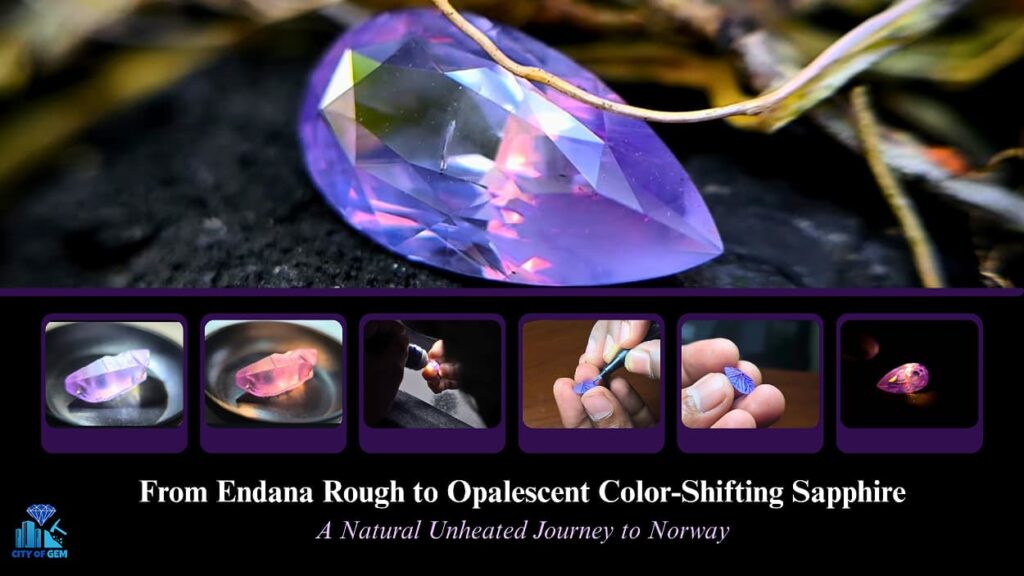
A 10.68 ct natural sapphire rough from Endana, Sri Lanka, was transformed into a 4.00 ct custom pear-shaped sapphire while preserving its natural rutile silk, opalescent character and lavender-blue to pink light-dependent color shift.
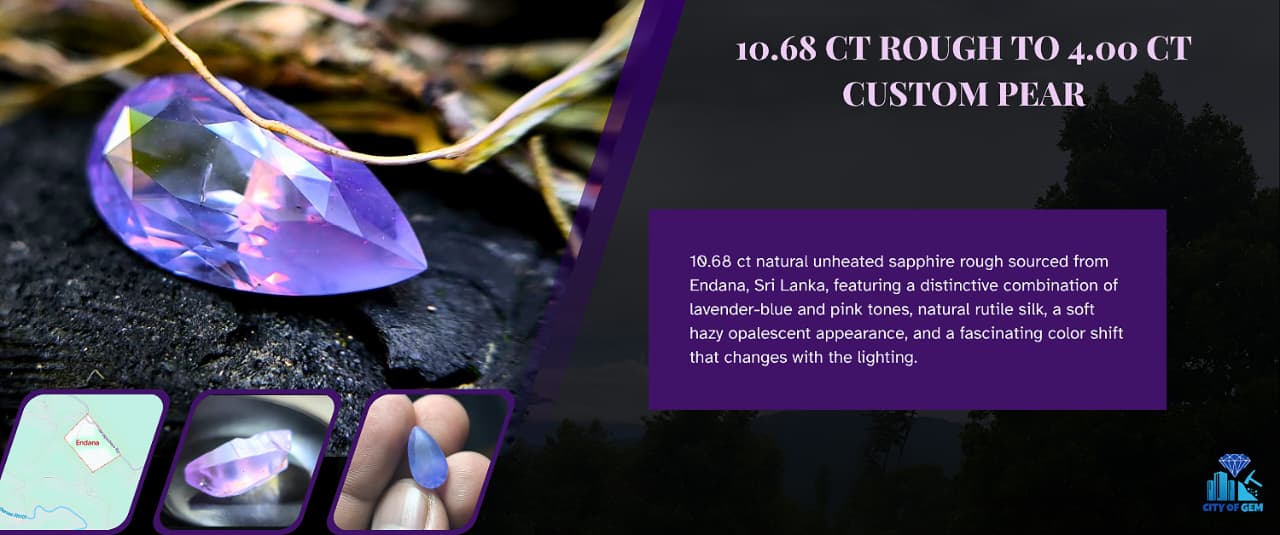
At City of Gem, some of the most interesting gemstones are not necessarily the stones with the simplest color or the easiest cutting plan. They are stones that present several possible directions and require a decision about which natural characteristics should be preserved. This sapphire was exactly that kind of project.
The journey began with a 10.68 ct facet-grade natural sapphire rough, measuring 18.4 × 8.2 × 7.7 mm, sourced directly from the mining area around Endana village in Sri Lanka. The rough was completely unheated when sourced and displayed a fascinating combination of lavender-blue and pink tones, internal rutile silk, a soft hazy appearance and light-dependent color behavior.
A Natural Sapphire Rough from Endana, Sri Lanka
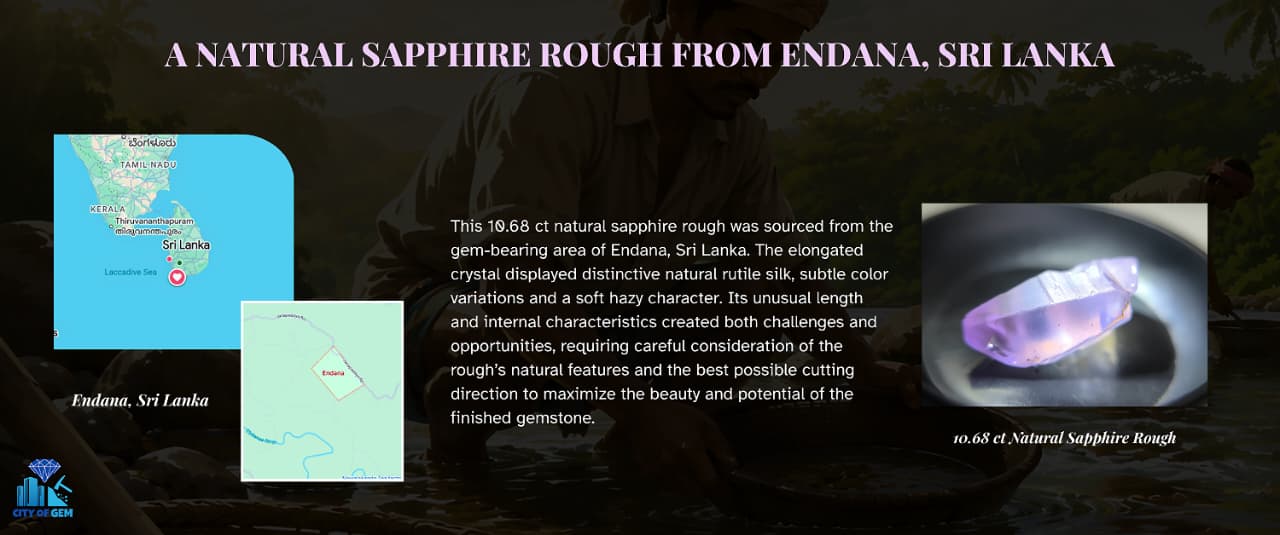
Endana is part of Sri Lanka’s historic gem-producing landscape, where sapphire and other gem minerals are recovered from gem-bearing deposits. For City of Gem, provenance begins before a gemstone reaches a dealer’s showcase.
This particular sapphire was acquired through our source-connected network rather than purchased as an already polished gemstone from the general market. That gave us the opportunity to understand the stone from its rough state and follow its complete transformation.
The elongated rough crystal weighed 10.68 ct. Its shape immediately presented both possibilities and challenges. There was enough material for a substantial finished gemstone, but the unusual length, internal silk and color distribution meant that cutting could not simply follow a standard commercial design.
Lavender Blue to Pink: A Sapphire That Responds to Different Light
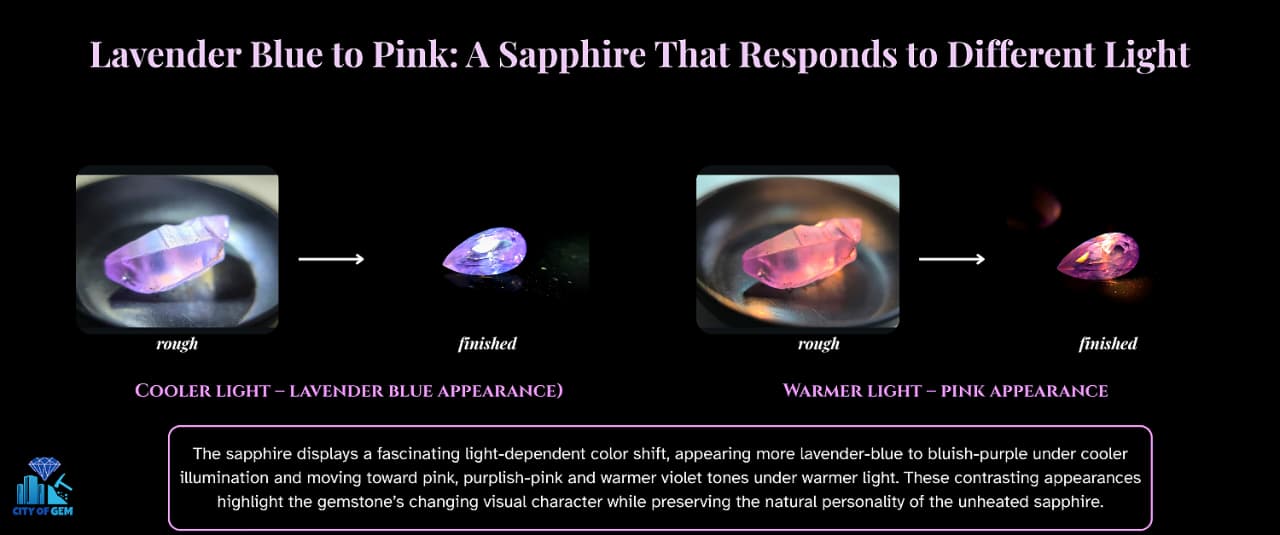
One of the most attractive characteristics of this sapphire was its light-dependent color shift.
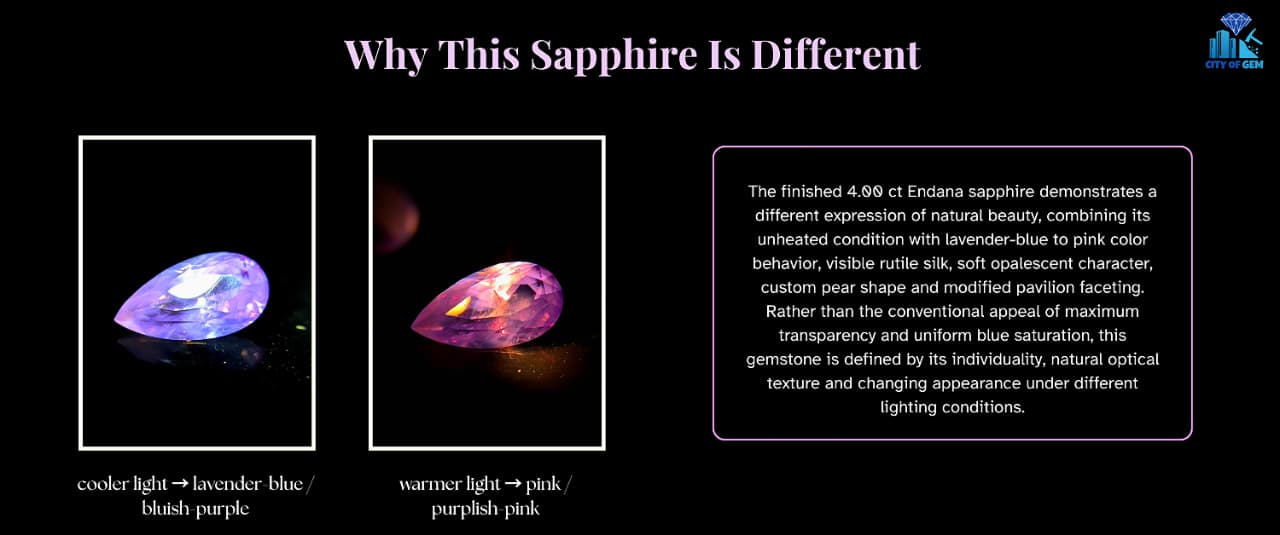
Under cooler fluorescent-type illumination, the stone showed a more noticeable lavender-blue to bluish-purple appearance. Under warmer incandescent-type illumination, its appearance moved toward pink, purplish-pink and warmer violet tones.
The photographs of both the rough and finished gemstone demonstrate this visual difference particularly well.
We describe this conservatively as a color shift rather than automatically classifying it as a laboratory-defined color-change sapphire. The exact strength and classification of color change should be determined under controlled lighting conditions by an appropriate gemological laboratory.
What matters visually is that the gemstone does not present exactly the same personality under every light source. That changing combination of blue, lavender, violet and pink became one of the main reasons to preserve the stone in its natural condition.
Natural Rutile Silk and the Opalescent Appearance
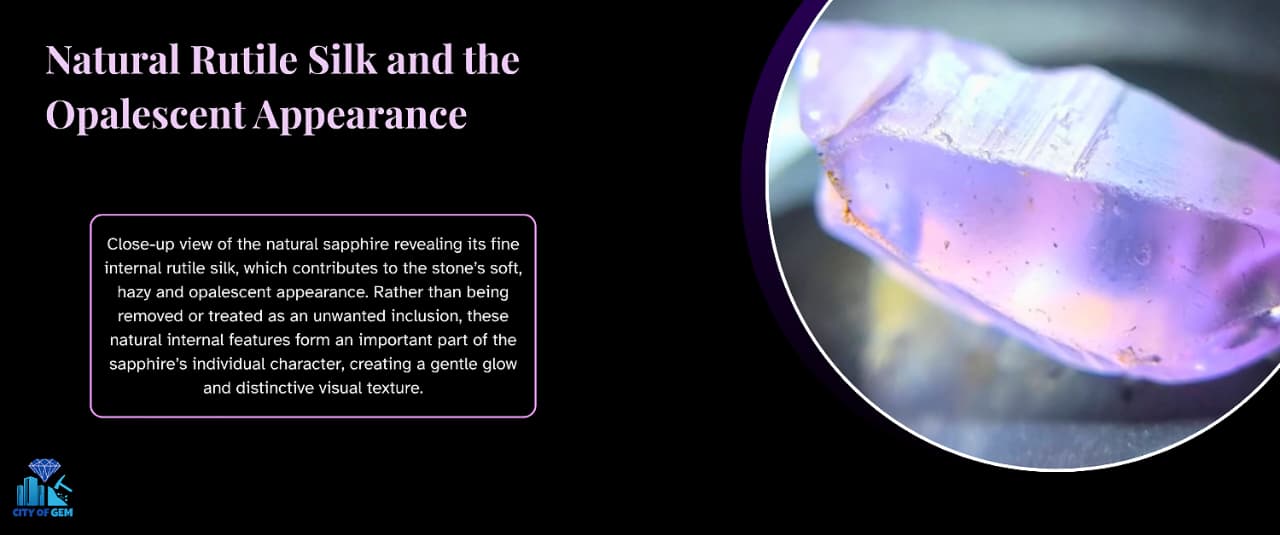
The rough also contained visible fine internal silk, giving parts of the sapphire a soft, slightly cloudy or opalescent appearance.
In natural corundum, fine rutile needles and related internal features can scatter light and influence transparency and visual texture. In some sapphires, these features create an appearance very different from the highly transparent, conventionally brilliant sapphire normally seen in commercial jewellery.
Here, the silk was not simply treated as something that had to be removed. It became part of the gemstone’s identity.
This is important because the term “opalescent sapphire” is commonly used in the contemporary gemstone market to describe sapphires with a soft, glowing, hazy or milky visual character. It should not be confused with opal, nor does it represent a separate mineral variety. The stone remains natural corundum; “opalescent” describes its visual character.
Two Possible Heat-Treatment Directions
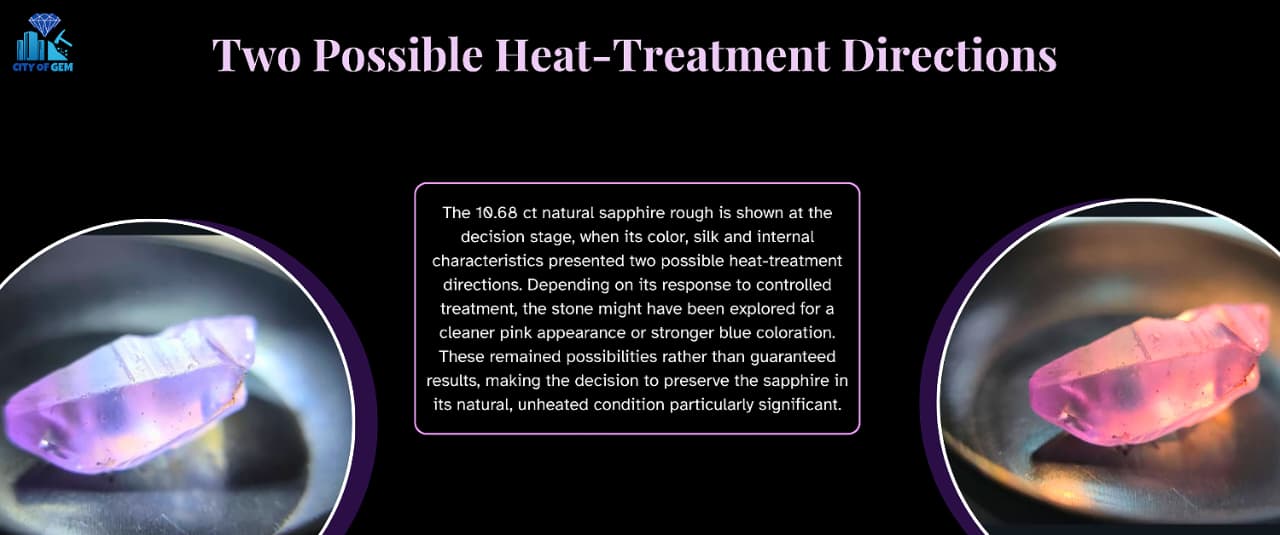
Before cutting, this sapphire presented an interesting decision.
Because of its color distribution and silk-related internal characteristics, the rough could potentially have been considered for professional heat-treatment experimentation. Depending on the chemistry, rutile, oxidation conditions, temperature and other variables, heating can modify the appearance of some Sri Lankan sapphires.
One possible objective would have been to reduce silk-related haziness and explore a cleaner pink appearance. Another possible treatment direction could have been aimed at developing or strengthening blue coloration.
However, these were possibilities—not guaranteed results.
Heat treatment of sapphire is a complex process. A cutter or dealer cannot responsibly promise that a particular rough sapphire will become stronger blue, cleaner pink or more transparent simply because it contains silk. The final response depends on the individual material and the heating conditions.
For this stone, those treatment possibilities made the customer’s eventual decision even more interesting.
A Norwegian Customer Chose the Natural Character
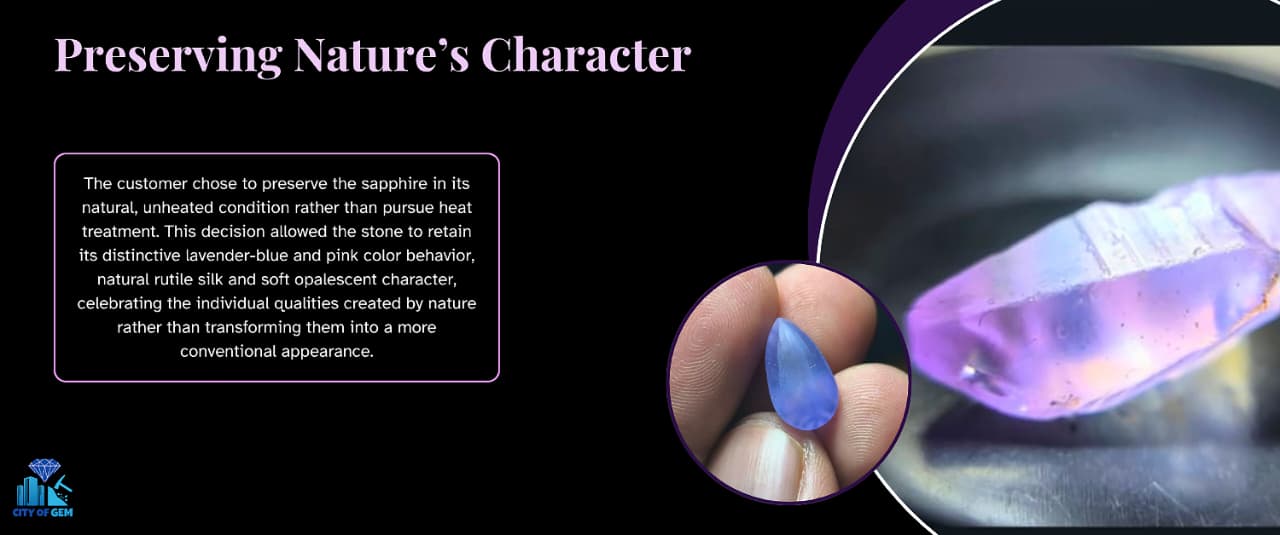
The sapphire rough had been purchased some time earlier by our customer from Norway.
After discussing the different possibilities, the customer decided not to heat the stone.
Instead of attempting to remove its silk or force the material toward a more conventional blue or pink appearance, the preference was to preserve what nature had already created: the lavender-blue and pink color behavior, soft internal silk and opalescent visual character.
This direction also reflects an interesting part of today’s colored-stone market. Some collectors and jewellery clients deliberately seek sapphires that retain natural silk, unusual zoning, soft translucency and individual character rather than expecting every sapphire to look perfectly transparent and commercially standardized.
For this project, preserving those characteristics became more important than trying to transform the material through heat.
Planning the Cut Around an Unusually Long Rough
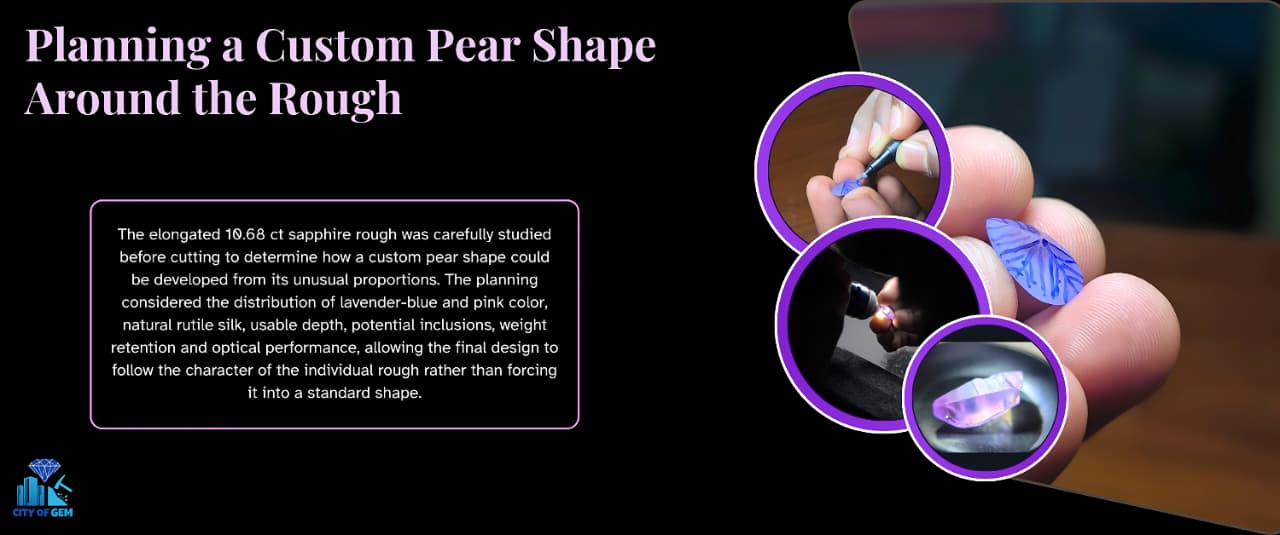
Once the unheated direction was confirmed, the next challenge was the shape.
At 18.4 mm long and only 8.2 mm wide, the original rough was noticeably elongated. Cutting directly according to the rough outline could have produced an awkward finished proportion or compromised the visual balance.
The customer was interested in a pear shape, so the stone was studied with the cutter to determine how that idea could be adapted to the available material.
The planning process considered several factors: the distribution of the lavender-blue and pink areas, internal silk, usable depth, potential inclusions, weight retention, optical performance and the position of the pear’s point and rounded end.
Rather than forcing the sapphire into a standard design, the cut was developed around the individual rough.
Modified Cross-Style Pavilion Cutting
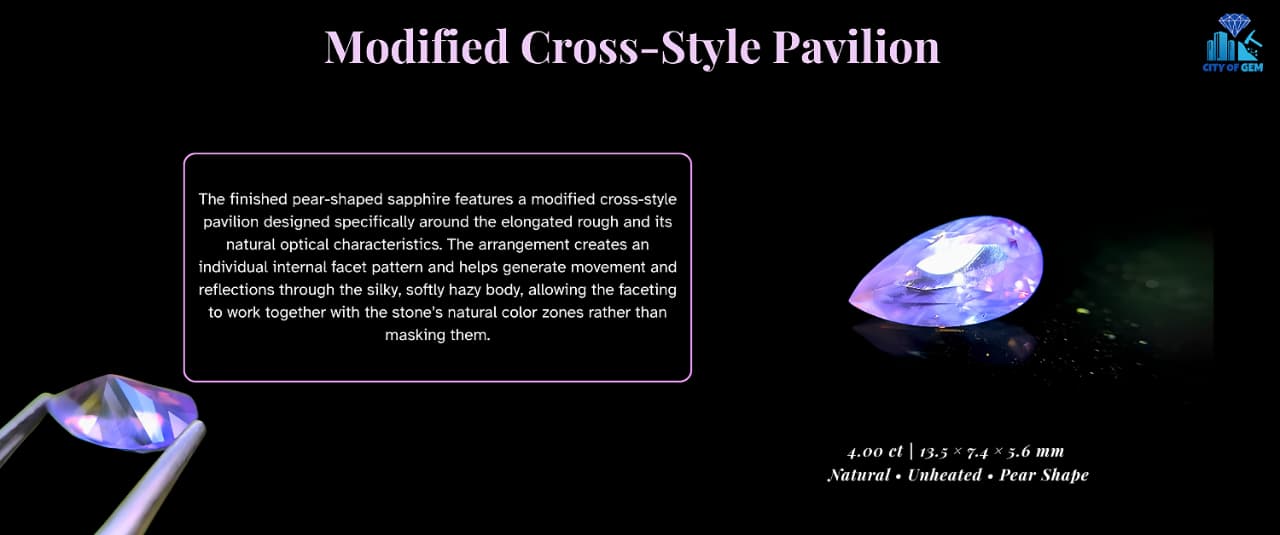
A conventional step-cut pavilion was not considered the most interesting solution for this material, and a straightforward brilliant pavilion was also not the final choice.
Instead, the cutter used a modified cross-style faceting arrangement on the pavilion.
This gave the finished gemstone a more individual internal pattern while working with the elongated rough and its soft optical character. The crown and outline were developed into a graceful drop-like pear shape, while the pavilion design helped create movement and reflections through the silky body.
This was not intended to make the stone behave like a perfectly transparent commercial sapphire. The goal was to combine faceting with the natural haze, color zones and changing light response already present in the material.
The Final Result: 4.00 ct Natural Unheated Sapphire
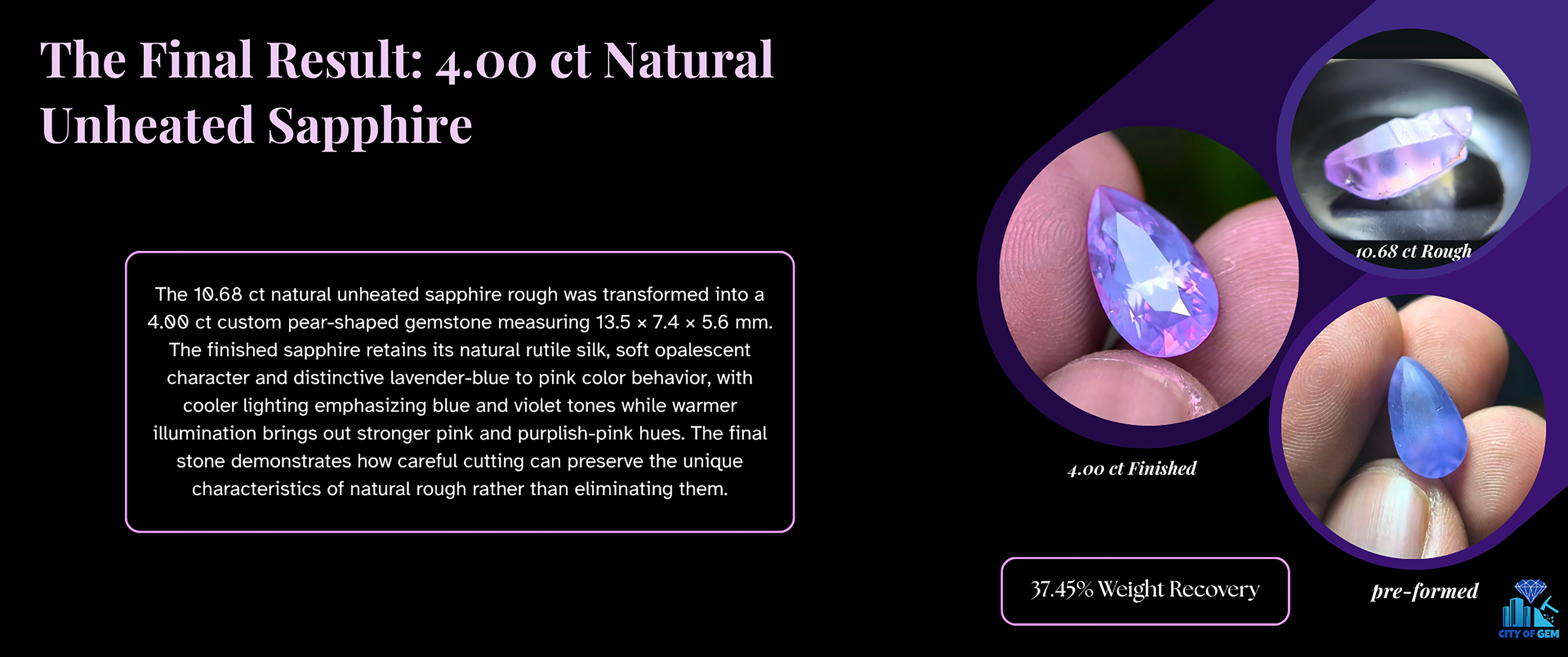
After cutting and polishing, the original 10.68 ct rough sapphire became a 4.00 ct finished pear-shaped gemstone measuring 13.5 × 7.4 × 5.6 mm.
That represents approximately 37.45% weight recovery, with 6.68 ct removed during planning, shaping, faceting and polishing.
The finished stone retains the features that made the original rough interesting.
In cooler lighting, lavender-blue and bluish-purple tones become more prominent. Under warmer illumination, pink and purplish-pink areas become considerably stronger. Between those conditions, the fine internal silk contributes a soft, glowing appearance that gives the sapphire its distinctive opalescent personality.
Rather than eliminating those characteristics, the cutting process allowed them to remain visible in a finished gemstone.
The stone was kept natural and unheated and subsequently accompanied by independent laboratory certification confirming its relevant gemological characteristics.
Why This Sapphire Is Different
There is no single definition of beauty in sapphire.
Some buyers want maximum transparency, strong saturation and extremely clean interiors. Others are attracted to silk, zoning, unusual color transitions and natural optical texture.
This Endana sapphire belongs firmly to the second category.
Its appeal comes from the combination of natural unheated condition, lavender-blue to pink color shifting, visible silk, opalescent character, custom pear shape and modified pavilion faceting.
Those characteristics make it difficult to compare directly with a conventional transparent blue sapphire. Its identity is based on individuality rather than uniformity.
From the Source to the Finished Gemstone
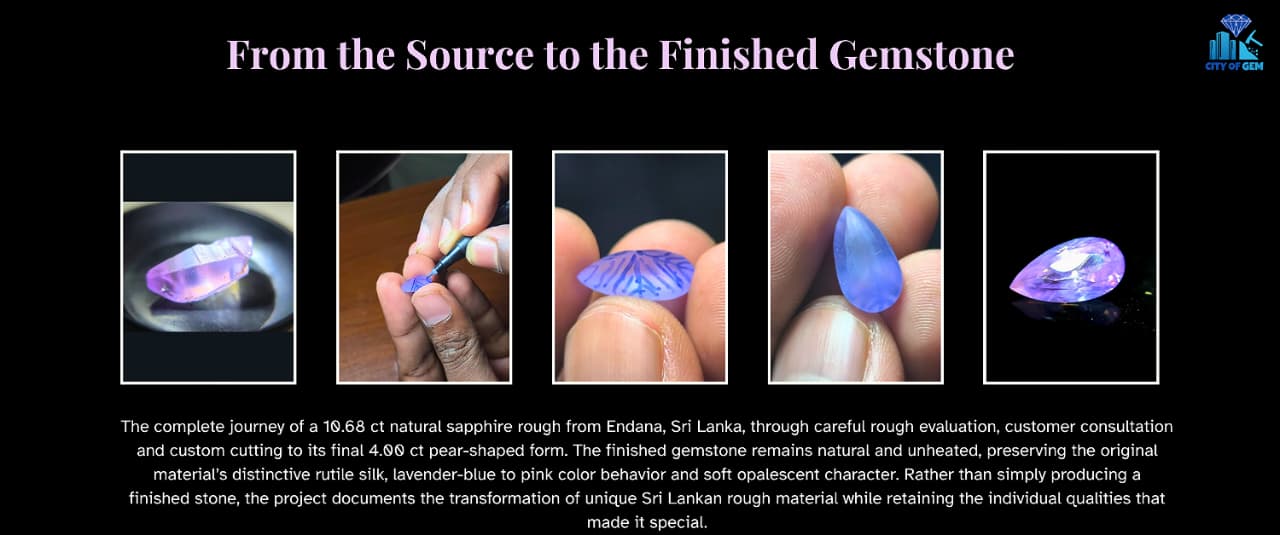
This project also represents the philosophy behind City of Gem.
Our passion is not simply finding already-cut gemstones in the market and reselling them. Whenever possible, we want to understand where the material comes from, examine it as rough, discuss its possibilities with the customer, plan the cutting direction and follow the gemstone until its final form is revealed.
For this sapphire, the journey began around Endana village in Sri Lanka, continued through rough evaluation and consultation with our Norwegian customer, and finally reached the cutting bench where its natural character was preserved rather than altered.
The result is not simply a 4.00 ct pear-shaped sapphire.
It is the documented transformation of a 10.68 ct Sri Lankan rough sapphire into a one-of-a-kind natural unheated gemstone, with its silk, shifting colors and individual personality still telling the story of the original material.
Frequently Asked Questions
“Opalescent sapphire” is a market description commonly used for sapphire displaying a soft, hazy, glowing or milky appearance. This visual effect may be associated with fine internal inclusions and light scattering. It does not mean the gemstone is an opal; sapphire is crystalline corundum.
Different light sources have different spectral distributions. Combined with the sapphire's trace-element chemistry and color zoning, this can change the relative appearance of blue, violet and pink components. For this stone, we conservatively describe the observation as a lavender-blue to pink color shift.
No. The rough was kept natural and unheated throughout the cutting process. Although professional heat-treatment possibilities were considered, the customer chose to preserve its original color, silk and opalescent appearance.
Potentially, but no result could have been guaranteed. Heat treatment can alter color and silk-related features in certain sapphires, but the response depends on the individual stone's chemistry, inclusions and heating conditions.
The rough was sourced from the gem-mining area around Endana village in Sri Lanka through City of Gem's source-connected gemstone network.
The original rough weighed 10.68 ct, while the finished gemstone weighs 4.00 ct, giving approximately 37.45% finished-weight recovery. Weight loss is a normal part of faceting, particularly when an irregular rough must be transformed into a balanced predetermined shape.