Jul 9, 2026
From Ceylon Rough to Lavender Blue Cushion Spinel: A City of Gem Cutting Journey
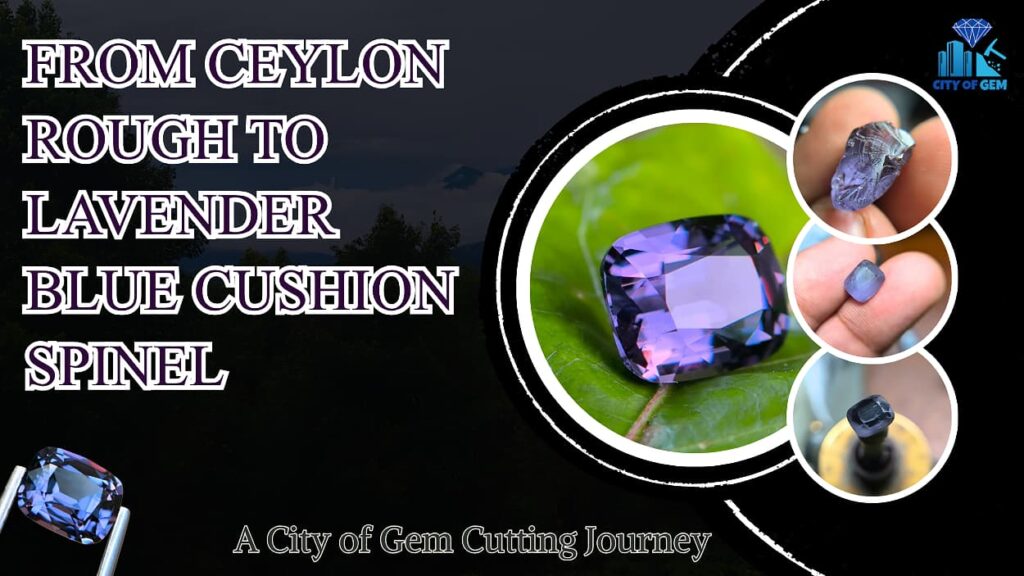
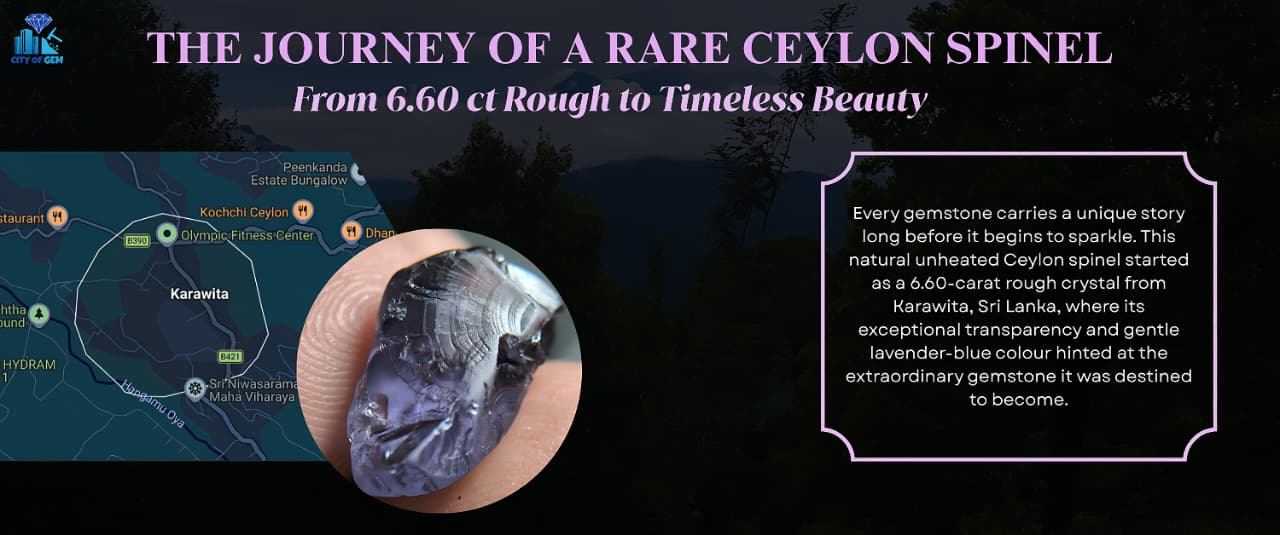
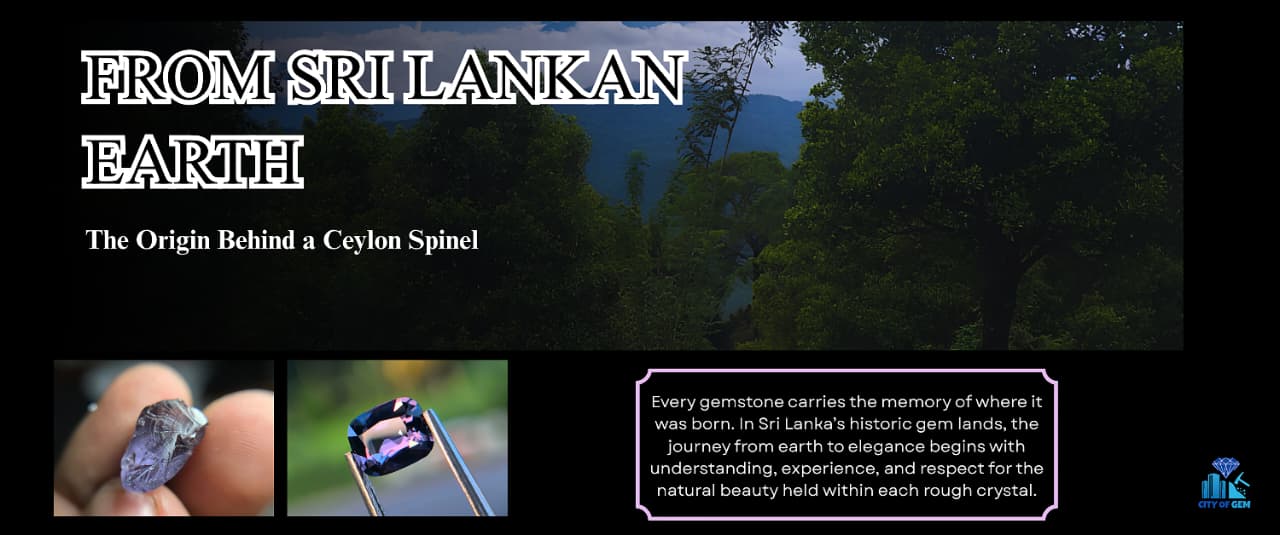
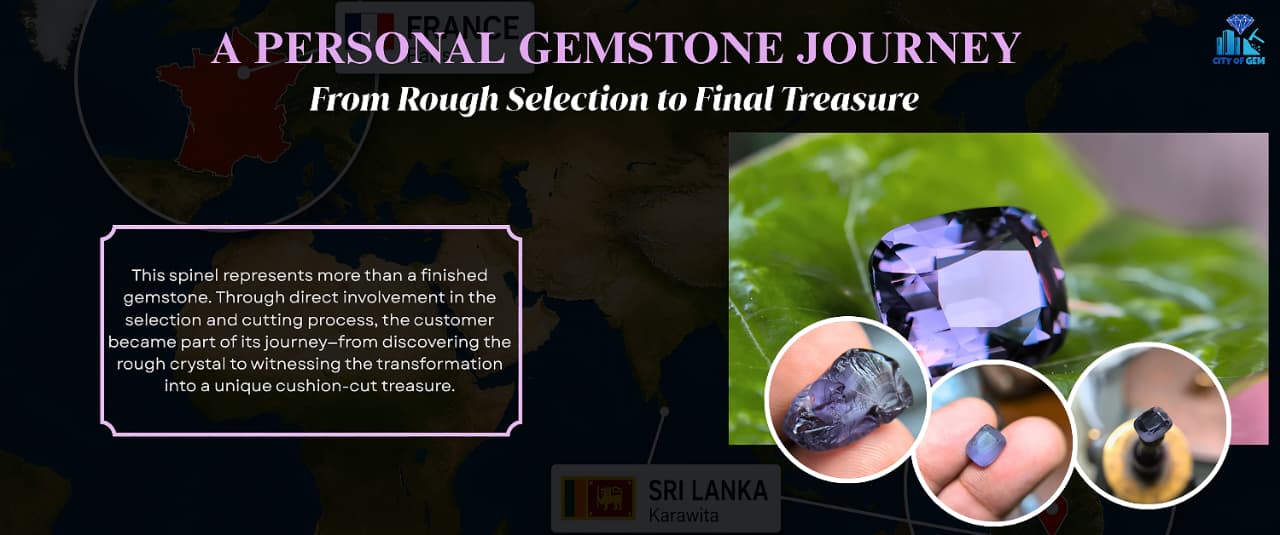
Every gemstone journey begins differently. Some stones are selected from a parcel after careful technical study, while others connect with a person the moment they are seen. This natural unheated Ceylon spinel began as a 6.60 carat rough stone from Karawita village around mining in Sri Lanka. With its glassy body, soft lavender blue appearance, and strong transparency, it already carried the quiet charm that makes fine spinel so attractive to collectors and jewellery lovers.
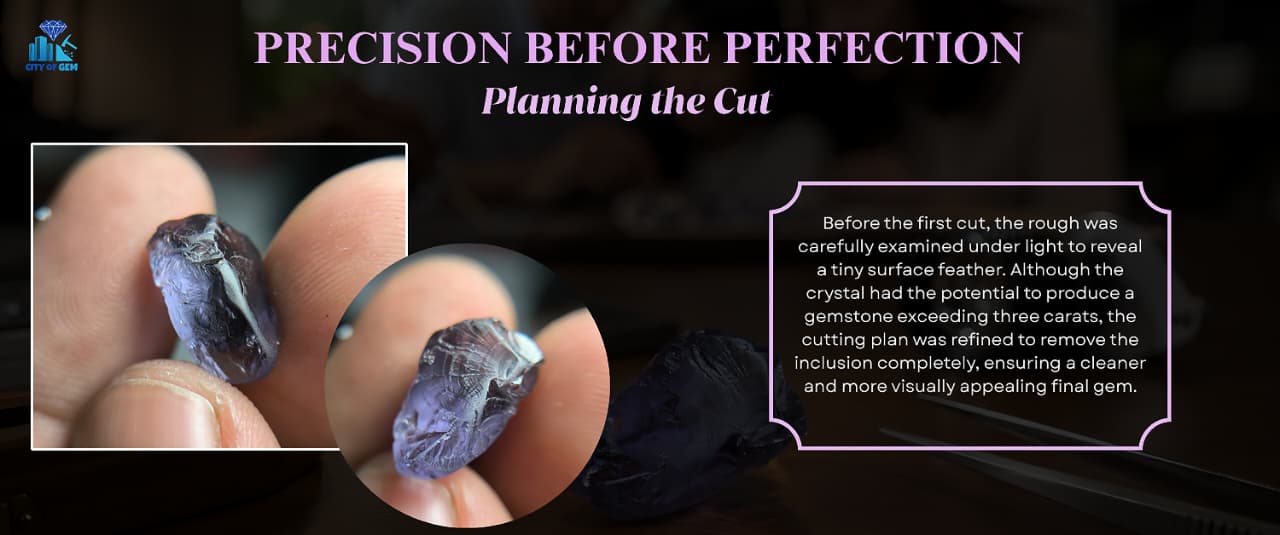
Before cutting, the rough was carefully checked under light. Near the surface, a very small feather-like inclusion was visible only when examined with a torch. It was not easily visible to the naked eye, but because the customer requested a clean stone, City of Gem decided to remove that area completely during the planning stage. Technically, the rough had potential to produce a 3 carat plus finished stone with very good clarity. However, after considering the customer’s request, the final decision was to prioritize cleanliness, balanced cutting, and a better-looking gemstone over maximum weight retention.
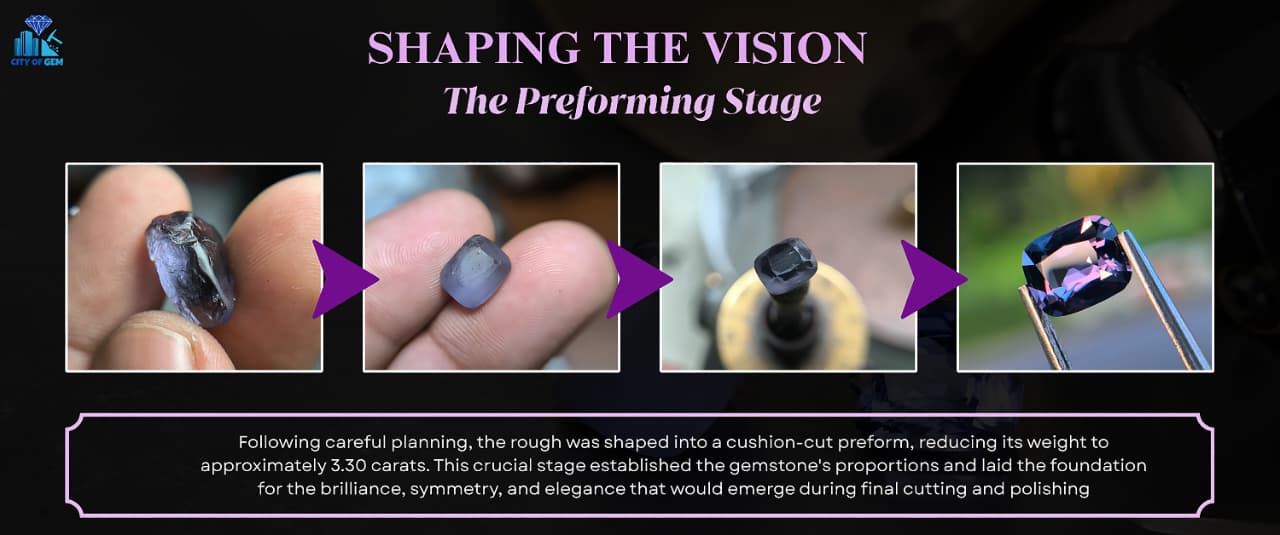
After discussion with the cutter, the stone was planned as a cushion shape. Cushion cuts are highly suitable for spinel because they allow the stone to show softness, depth, and brilliance while keeping an elegant outline for jewellery design. The preforming stage reduced the stone to approximately 3.30 carats, shaping the rough into a cleaner and more controlled form before final cutting and polishing. This stage is one of the most important parts of the journey, because it decides the direction of the final gemstone.
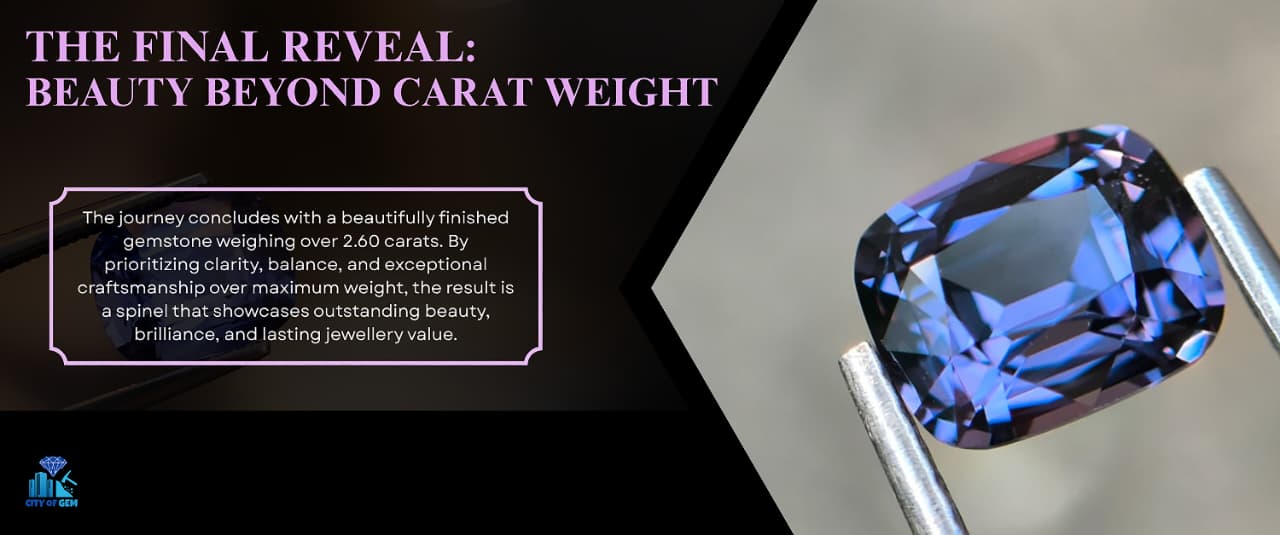
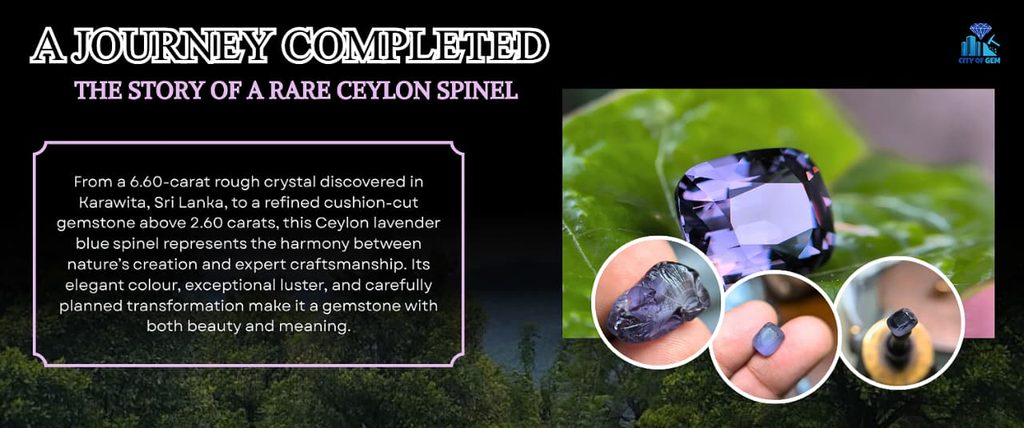
The finished gemstone came out above 2.60 carats, with a pleasing face-up appearance and excellent luster. Although the final weight was lower than the maximum possible estimate, the clarity and beauty were improved by removing the small feather-like inclusion near the surface. This is a real example of practical lapidary judgment: sometimes the better gemstone is not the heaviest one, but the one that best combines color, clarity, polish, shape, and long-term jewellery value.
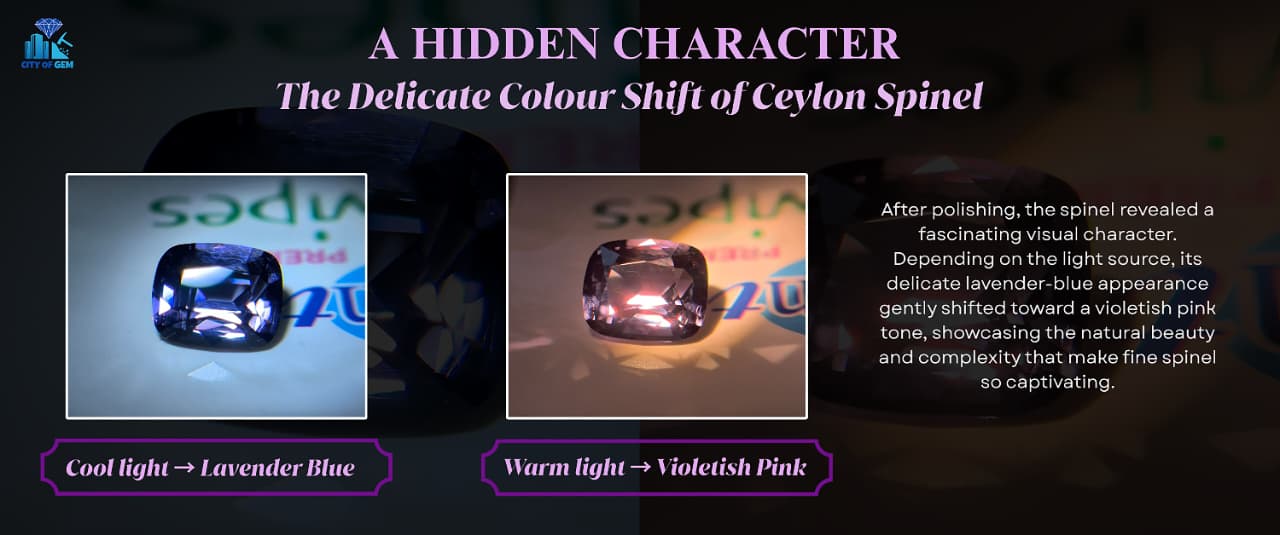
One of the most interesting surprises appeared after polishing. At first, the stone was appreciated as a lavender blue spinel. Under soft light, it showed a calm bluish violet tone, gentle and elegant, almost like lavender petals mixed with cool blue. Later, under different lighting conditions, including sunlight and warmer light, a more violetish pink hue became visible. This gave the stone an additional character that was not fully noticed in the rough stage. Rather than a strong dramatic color-change claim, it is more professional to describe this as a delicate color shift between lavender blue and violetish pink depending on the light source.
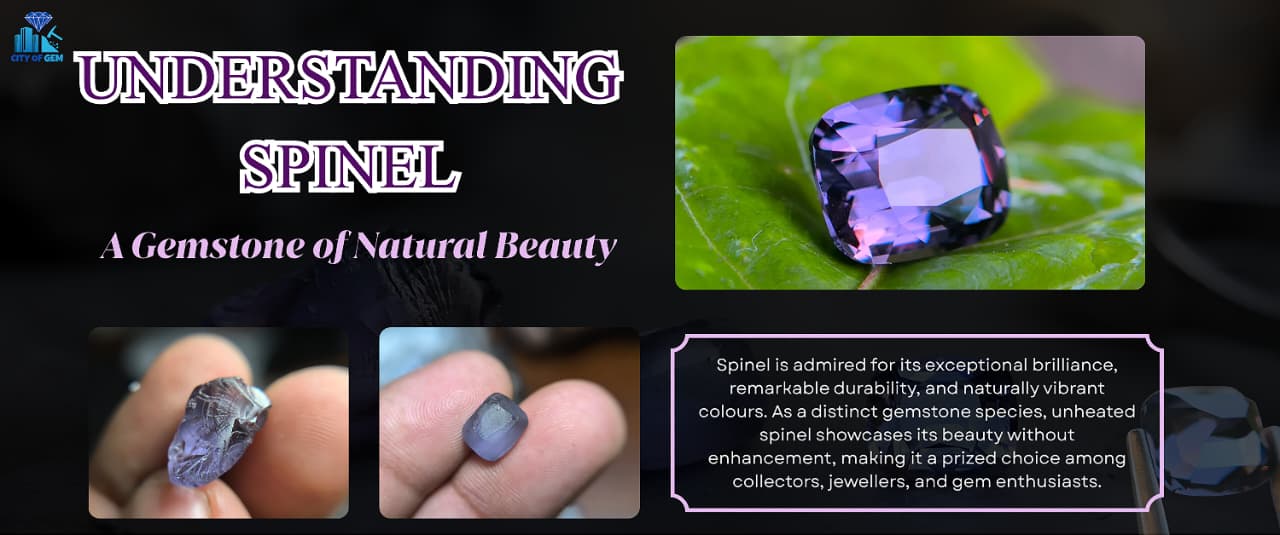
From a gemological point of view, spinel is a highly respected gemstone species known for its natural beauty, durability, and wide color range. Unlike sapphire, which belongs to corundum, spinel is its own gemstone species with its own optical character and brilliance. Fine spinel can show excellent luster, bright transparency, and elegant color behavior under different lighting. Unheated spinel is especially appreciated because the color and appearance are presented in their natural condition.
Sri Lanka, historically known as Ceylon, has produced beautiful spinel for generations, often alongside sapphire and other important gemstones. Karawita and the wider Sri Lankan gem-bearing regions are part of this long gemstone culture. For City of Gem, the origin is not only a word added to a product description. It is part of the story. Working close to source areas allows us to understand rough material, observe how stones appear before cutting, and make better decisions during the transformation process.
This spinel journey also shows the value of a direct customer experience. The French family did not simply choose a finished gemstone from a showcase. They saw the rough, discussed its potential, understood the cutting decisions, and became part of the transformation. That kind of process creates a deeper connection between the buyer and the stone. The finished cushion spinel is not just a polished gemstone; it carries the memory of selection, planning, cutting, checking, and final handover.
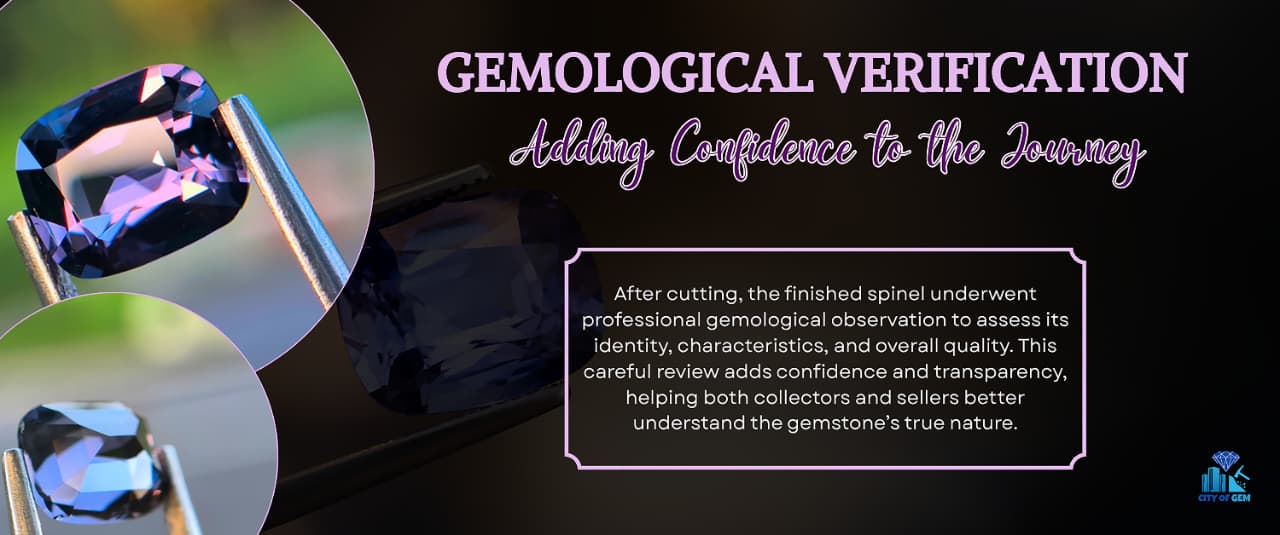
After cutting, the stone was also checked by a graduate gemologist with GIA and AIGS training, adding another layer of professional observation to the process. For important gemstones, this type of gemological review supports transparency, especially regarding identity, treatment understanding, and overall quality. While formal laboratory documentation is always the strongest confirmation, professional checking helps both the seller and buyer feel more confident about the stone’s journey.
In the end, this Ceylon lavender blue spinel is a beautiful example of what City of Gem values most: source-connected gemstones, careful cutting decisions, honest communication, and meaningful customer experience. From a 6.60 carat rough stone from Karawita to a clean cushion-cut gemstone above 2.60 carats, the journey reflects both nature and human judgment. Its lavender blue body, violetish pink light response, excellent luster, and clean face-up appearance make it a refined natural spinel with strong jewellery potential and a story worth remembering.
FAQ
- Where is the rough stone from?
The rough stone is from Karawita village around mining in Sri Lanka. - Is this spinel heated?
No. The stone is described as unheated. - What color is this spinel?
The stone shows a lavender blue to bluish violet color, with violetish pink tones visible under certain lighting. - What fruit or natural color can describe this stone?
The color can be compared to lavender flowers, violet petals, blueberry skin, and ripe black grape skin. - Why was more weight removed during cutting?
A very small feather-like inclusion near the surface was removed to prioritize a cleaner finished gemstone, as requested by the customer. - What shape was selected for the finished gemstone?
The stone was planned and cut as a cushion shape. - What was the preform weight?
The preformed stone weighed approximately 3.3