
Jul 16, 2026
A Living Moment Trapped in Sapphire for Millions of Years
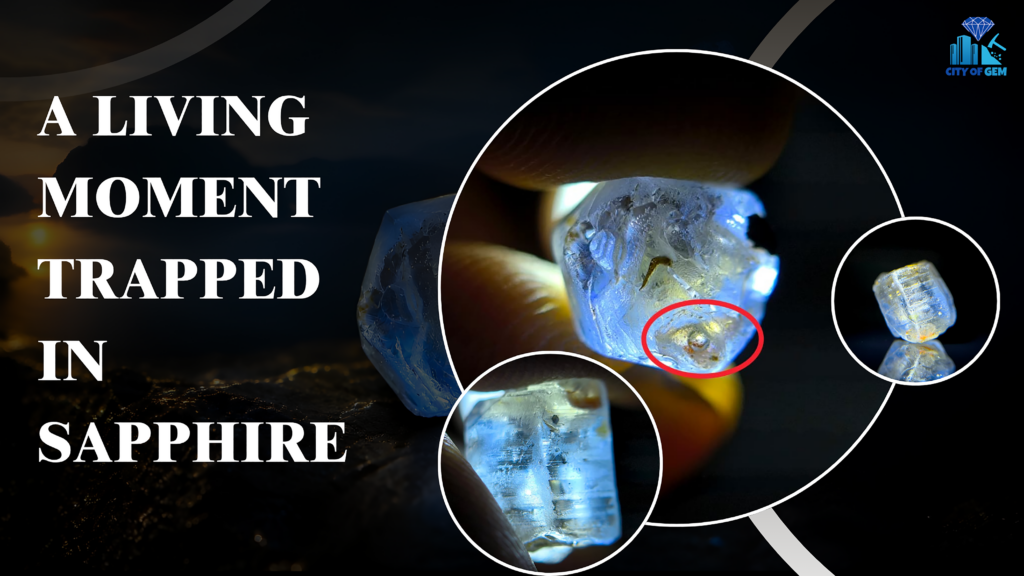
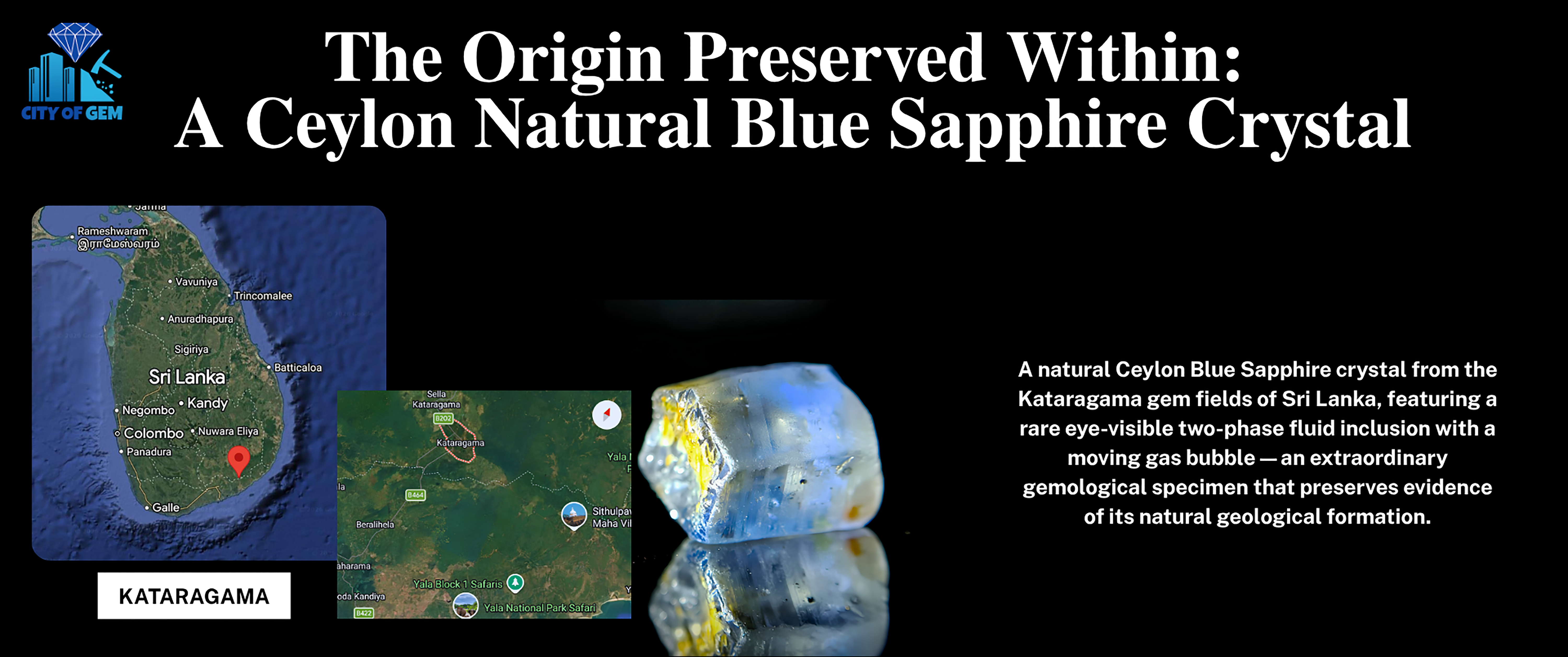
Some gemstones are admired for color. Some are valued for clarity. Others become important because they preserve a rare natural story inside the crystal itself. This Ceylon Natural Blue Sapphire Crystal from Kataragama village around mining in Sri Lanka belongs to that special category. It is not only a blue sapphire crystal, but also a gemological specimen showing an eye-visible two-phase fluid inclusion with a moving gas bubble inside a natural cavity.
The sapphire weighs 7.83 carats and measures 9.3 x 8.6 x 7.5 mm. Its body has a light blue to glassy blue appearance, with excellent luster and naturally occurring growth marks visible on the crystal surface. The form is also meaningful. It shows a six-sided hexagonal tabular body, sometimes called a barrel crystal in the local gemstone market. This natural shape gives the stone a strong crystal identity, preserving the original structure before any human cutting or polishing.
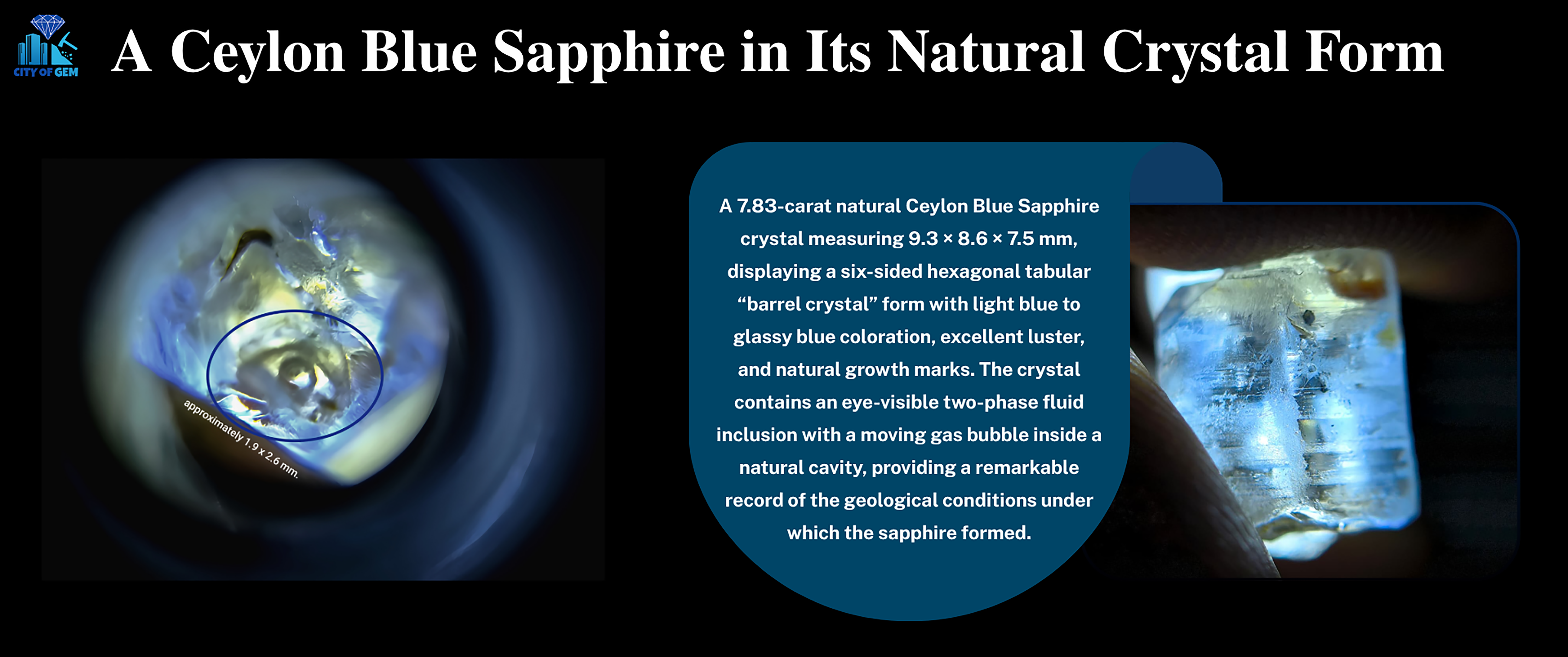
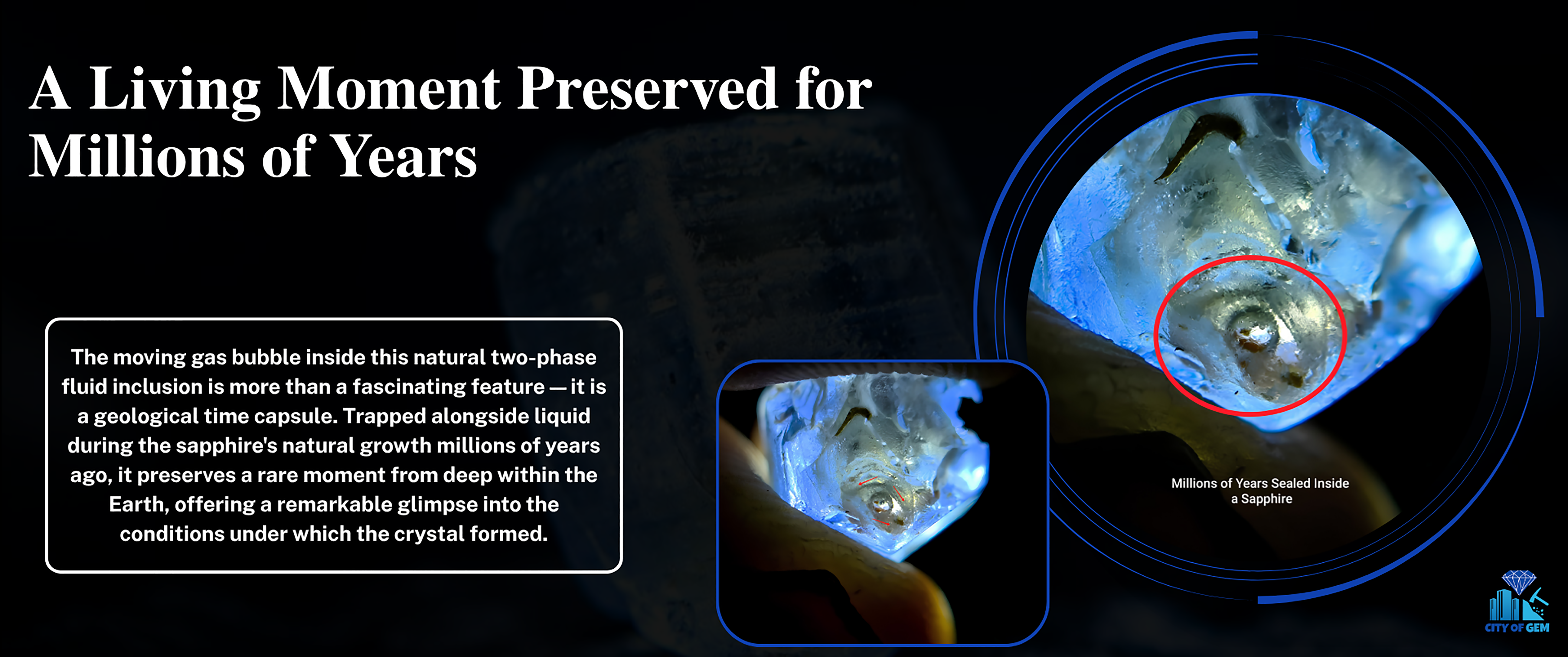
The most fascinating feature is inside the sapphire. A natural cavity measuring approximately 1.9 x 2.6 mm contains liquid and a moving gas bubble. In gemology, this type of internal feature is known as a two-phase fluid inclusion. When the stone is tilted, the gas bubble moves within the liquid-filled cavity. This movement makes the stone feel alive, not in a mystical way, but as a visible reminder of the geological environment in which the sapphire formed.
The phrase “A Living Moment Trapped in Sapphire for Millions of Years” describes this idea poetically, but the meaning is geological. The liquid and gas were trapped naturally during the sapphire’s formation, likely over a very long geological period. Today, when the bubble still moves inside the crystal, we are seeing a tiny preserved record from the time the sapphire grew beneath the earth.
Two-phase inclusions are more familiar to many collectors in quartz and similar minerals, where moving bubbles are easier to find and often shown as “enhydro” specimens. In sapphire, however, especially natural corundum, a moving gas bubble that can be seen clearly without strong magnification is much less common. The market may sometimes call this type of piece an “enhydro sapphire,” but the more professional gemological wording is a sapphire crystal with a two-phase fluid inclusion.
This point must be explained carefully. “Enhydro sapphire” is a useful market term for collectors, but it is not a separate sapphire variety. The stone remains natural corundum, specifically a blue sapphire crystal. Its special value comes from the visible liquid-and-gas inclusion, the natural cavity, the moving bubble, and the fact that this feature can be observed with the eye when the stone is tilted.
Similar fluid-inclusion behavior in sapphire has been documented in gemological literature. GIA has published examples of carbon dioxide fluid inclusions and phase-change behavior in Sri Lankan sapphire, where liquid and gas phases can become visible inside negative crystal cavities. GIA has also discussed the importance of intact CO₂ fluid inclusions in corundum for heat-treatment interpretation. This article does not claim that GIA examined this exact sapphire, but it acknowledges that related sapphire fluid-inclusion behavior has been recorded by respected gemological sources. [Reference: GIA Gems & Gemology, Koivula 1986; GIA Micro-World, Renfro, Koivula and Shigley 2016]
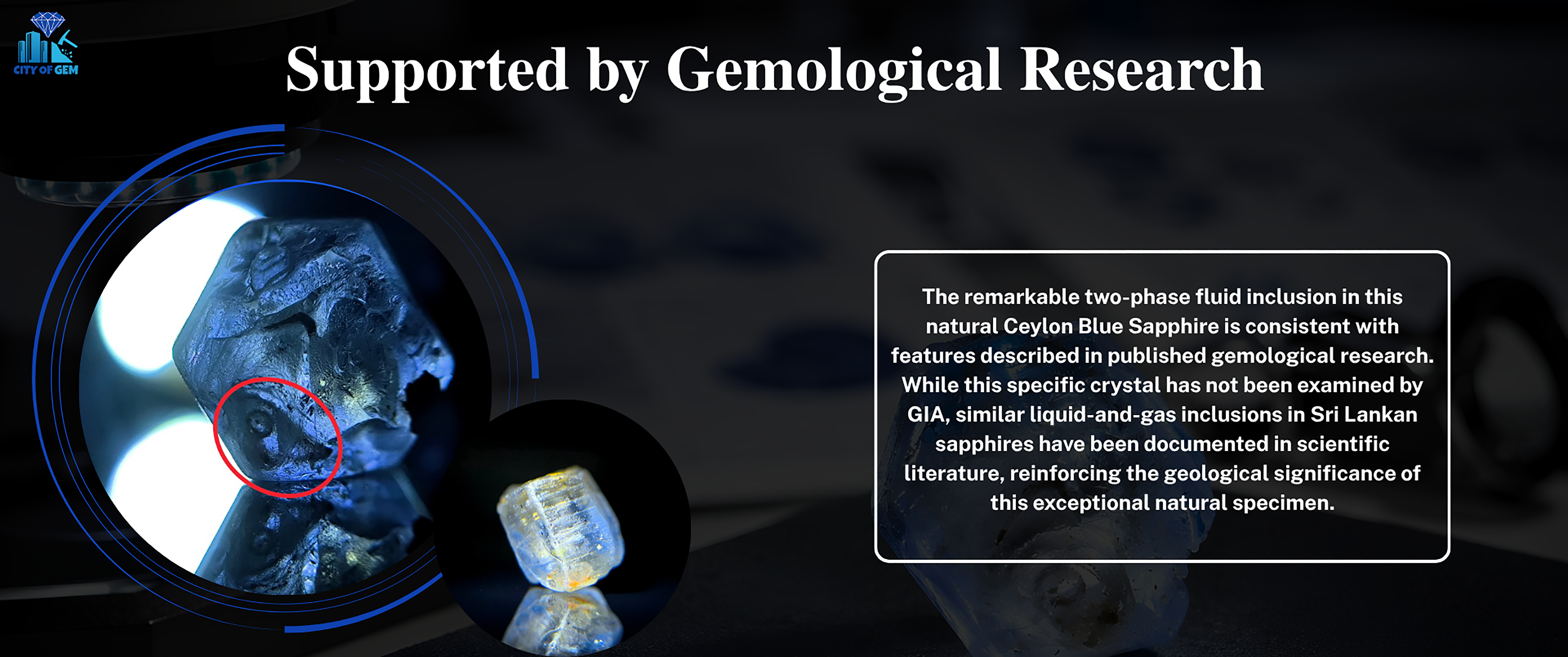
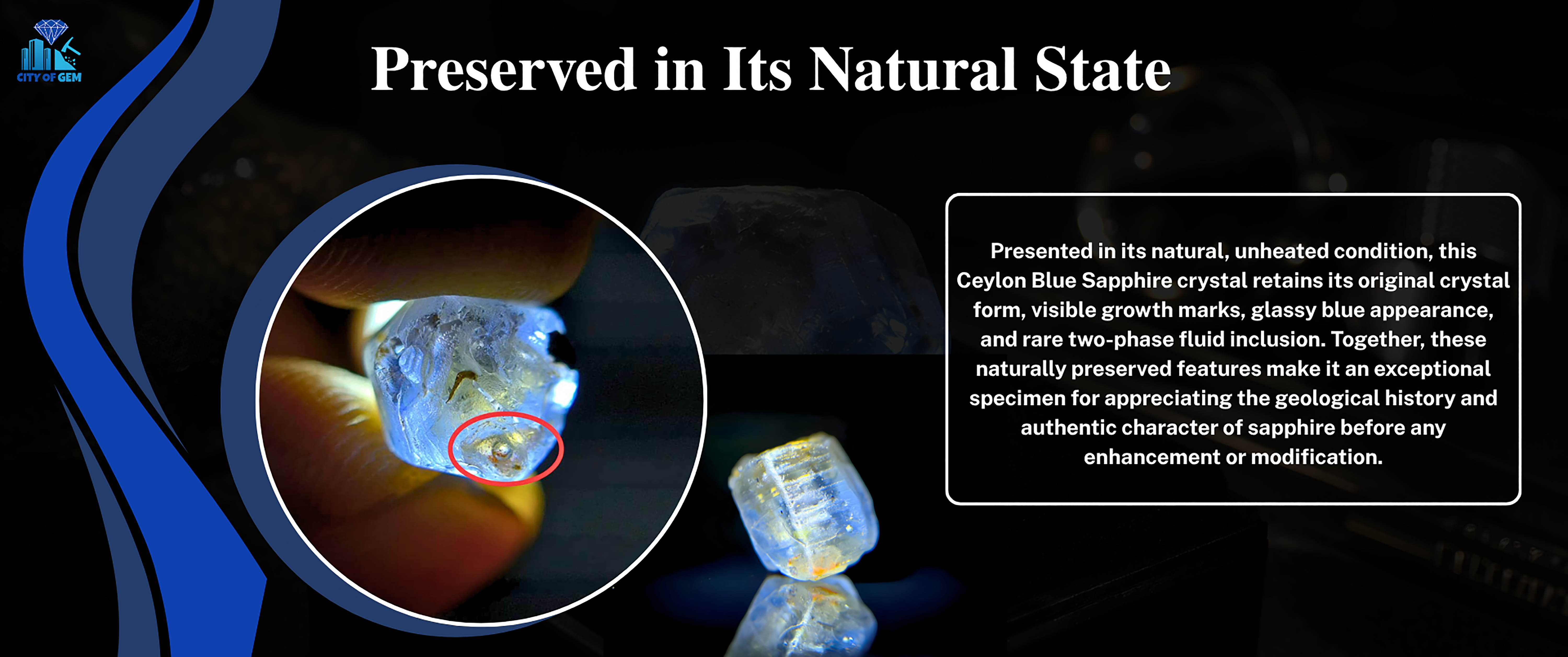
The unheated condition adds further interest. No heat treatment is described for this crystal, allowing the collector to appreciate the stone in its natural state. In professional gemology, treatment disclosure is important. A laboratory report is always the strongest way to confirm treatment status, but from a collecting and educational point of view, a natural sapphire crystal with visible growth marks, glassy body, and a moving two-phase inclusion already offers a very unusual observation.
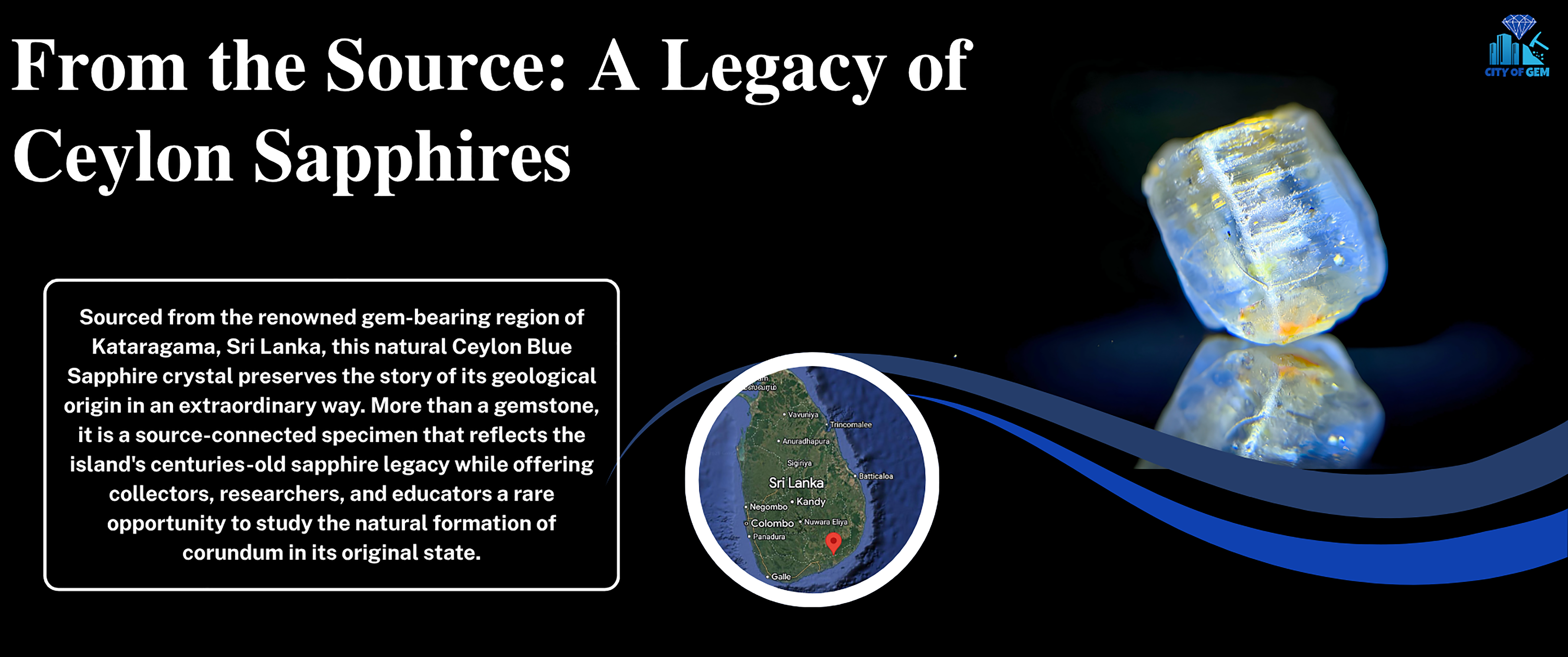
Sri Lanka, historically known as Ceylon, has produced some of the world’s most respected sapphires for centuries. Many buyers know Sri Lankan sapphires as finished gemstones used in fine jewellery, but source-connected collectors also understand the importance of natural crystal specimens. Stones like this show more than color. They show formation, growth, internal environment, and geological history.
Kataragama is one of the Sri Lankan source areas known in the gem trade, and a crystal from this region with a visible moving gas bubble becomes especially interesting for collectors, gemology students, and gemstone educators. It connects local source knowledge with international gemological discussion. For City of Gem, this is the kind of stone that represents more than normal buying and selling. It reflects the value of working close to source areas, observing unusual natural materials, and presenting them with respect and accuracy.
This sapphire is not best described as a faceting rough stone. Its value is better understood as a rare collector-grade crystal specimen and gemological study piece. Cutting it would risk losing the very feature that makes it special. The visible cavity, moving bubble, growth marks, and natural crystal form are all part of the stone’s identity. For collectors, that identity is the reason the stone matters.
In the end, this Ceylon blue sapphire crystal is a small but powerful example of how gemstones can preserve natural history. Its glassy blue body gives beauty, its hexagonal form gives structure, and its moving gas bubble gives life to the story inside. It is a rare reminder that gemstones are not only objects of decoration. Sometimes, they are natural archives, holding tiny records of the earth inside their crystal bodies.
FAQ
1. What is this gemstone?
This is a natural blue sapphire crystal, species natural corundum.
2. What is the weight of this sapphire?
The sapphire crystal weighs 7.83 carats.
3. What are the measurements?
The measurements are 9.3 x 8.6 x 7.5 mm.
4. Where is this sapphire from?
It is from Kataragama village around mining in Sri Lanka.
5. Is this stone better for cutting or collecting?
This stone is best presented as a natural crystal specimen for collectors, gemology lovers, and educational study, because cutting could destroy or reduce the visible inclusion feature.
6. What is special about this sapphire crystal?
It contains an eye-visible two-phase fluid inclusion with liquid and a moving gas bubble inside a natural cavity.
7. What is the cavity size?
The cavity is approximately 1.9 x 2.6 mm.
8. What does two-phase inclusion mean?
A two-phase inclusion contains two internal phases, usually liquid and gas, trapped inside a natural cavity during crystal formation.
9. Why is a moving gas bubble in sapphire uncommon?
Moving bubbles are more familiar in quartz, but in sapphire, a clearly visible moving bubble inside a natural cavity is much less commonly seen.
10. Can this be called enhydro sapphire?
“Enhydro sapphire” is a market term sometimes used for this type of stone. The professional gemological description is a sapphire crystal with a two-phase fluid inclusion.
11. Did GIA certify this exact stone?
No GIA report is provided for this exact stone. However, similar fluid-inclusion behavior in Sri Lankan sapphire has been documented by GIA.