
Jun 13, 2026
Natural Tsavorite Garnet Transformation: Source, Cutting, Certification, and Final Journey
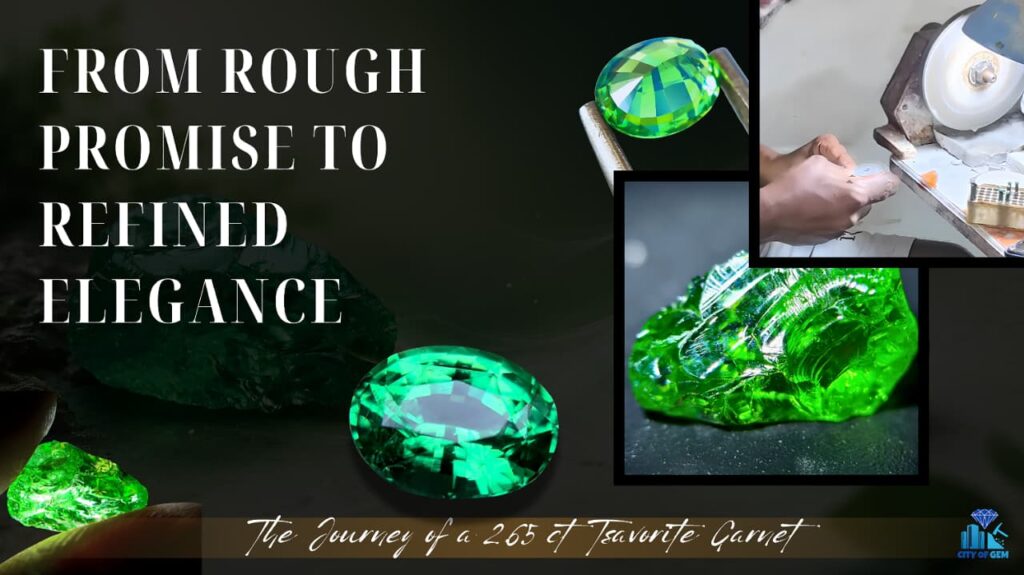
Every finished gemstone has a beginning, and some of the most interesting stories in gem cutting begin with a rough that does not immediately reveal its final shape. This natural Tsavorite Garnet is one of those examples. What began as a 2.65 carat facet-grade rough gemstone from Tanzania, East Africa, measuring 10.6 x 7.2 x 5.4 mm, was carefully studied, planned, and transformed into a 1.19 carat oval step cut gemstone measuring 7.11 x 5.48 x 4.01 mm.
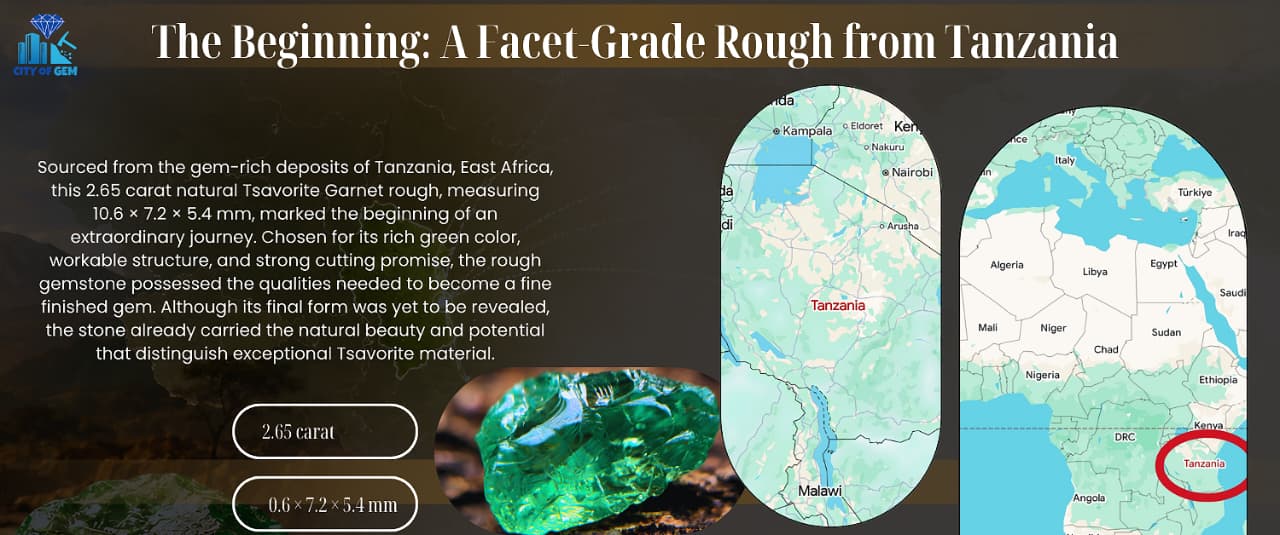
At City of Gem, the journey of this stone started at the source. The rough was sourced by City of Gem as natural facet-grade material, selected for its vivid green color, workable structure, and cutting promise. In rough form, the stone already showed the bright green life that makes fine Tsavorite so desirable among gem lovers, jewelry designers, and collectors. But rough stones do not always follow the final shape that seems most obvious at first glance. In this case, the original rough shape suggested something closer to a drop or pear-like direction. Even so, through careful planning and technical judgment, the finished result became an oval shape above one carat, which gives this gemstone a particularly attractive commercial and design value.
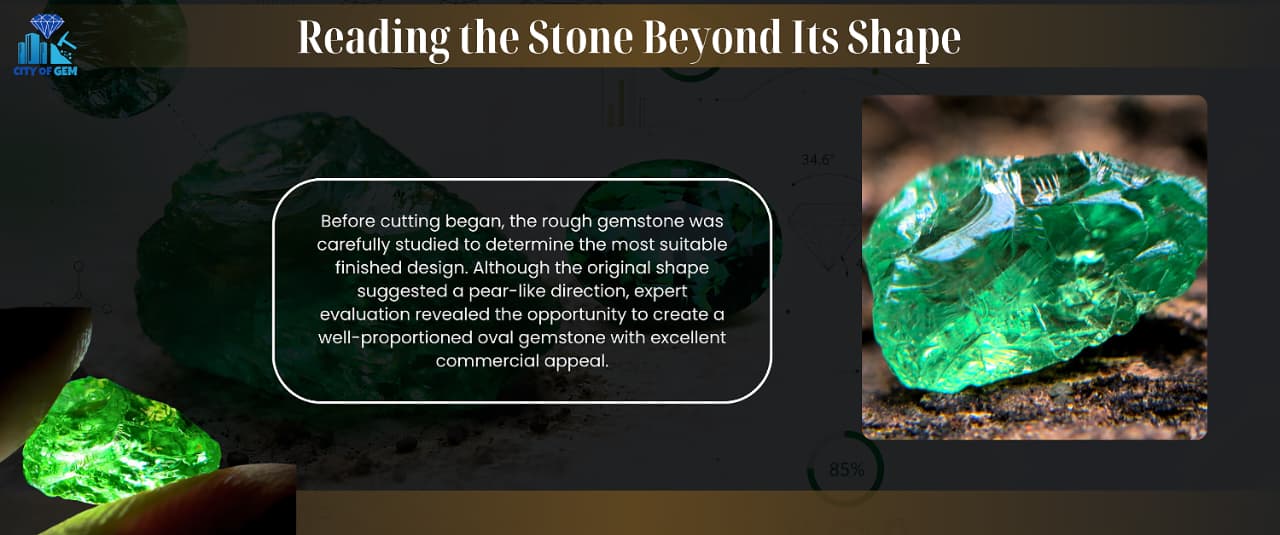
That change is one of the most important parts of the story. In gemstone cutting, shape recovery is never only about following the outer form of the rough. It depends on internal structure, orientation, color flow, depth balance, and the cutter’s ability to read the material correctly. A stone may appear suited to one shape from the outside, yet still yield a better finished gem in another form if the lapidary sees a more balanced path. In this Tsavorite, that judgment mattered. The finished oval step cut brought out a clean and lively face-up appearance while preserving a strong finished size.
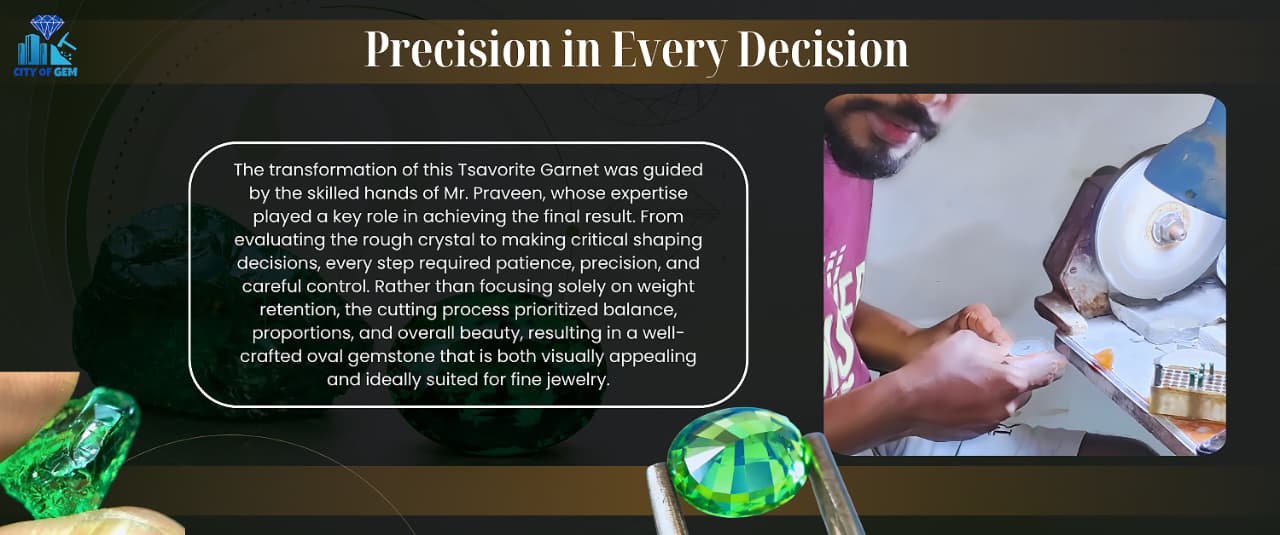
The cutting work was done by Mr. Praveen, whose role in shaping this stone was central to the final result. From rough assessment to shaping decisions, the transformation required patience and control rather than simple weight retention. The result is a gemstone that feels deliberate, proportioned, and practical for jewelry use. Oval shapes remain among the most versatile and desirable forms in colored stones because they sit beautifully in rings, pendants, and custom settings while offering a balanced face-up spread. Achieving an oval above one carat from this original rough adds further importance to the finished gem.
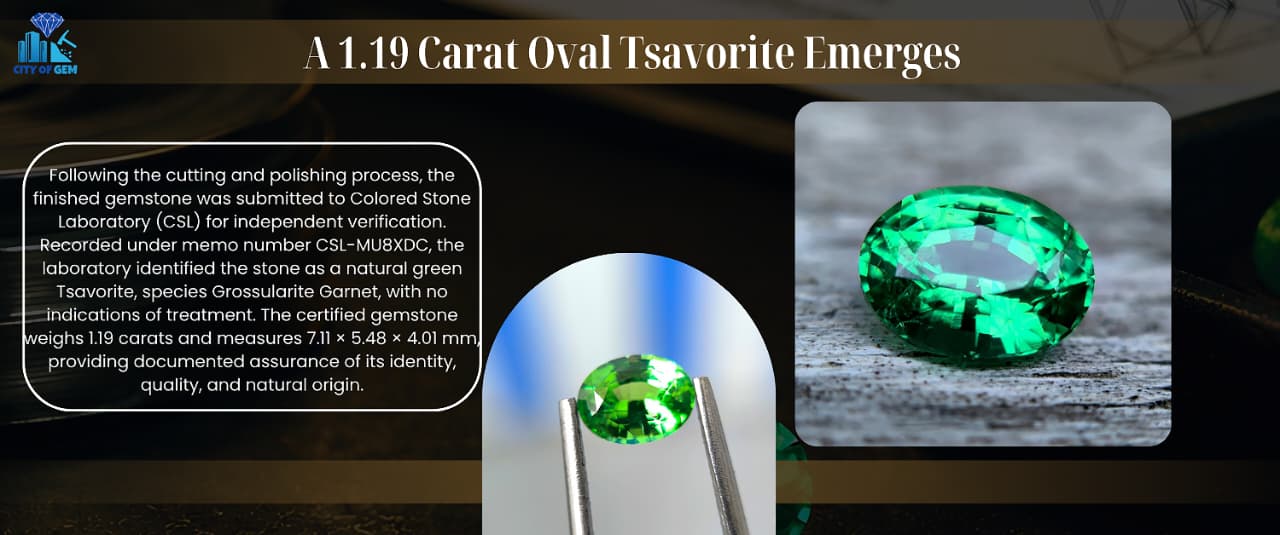
The finished stone was later submitted to Colored Stone Laboratory (CSL) and recorded with memo number CSL-MU8XDC. The memo identifies the stone as green Tsavorite, species Grossularite Garnet, with no treatment, and confirms the finished weight of 1.19 carats. For buyers and collectors, this kind of documentation strengthens confidence by connecting the finished gem to a recognized laboratory opinion. In colored gemstone trade, a certified natural untreated Tsavorite with good cutting appeal carries value not only as a gemstone, but as a documented result of careful source-to-finish work.
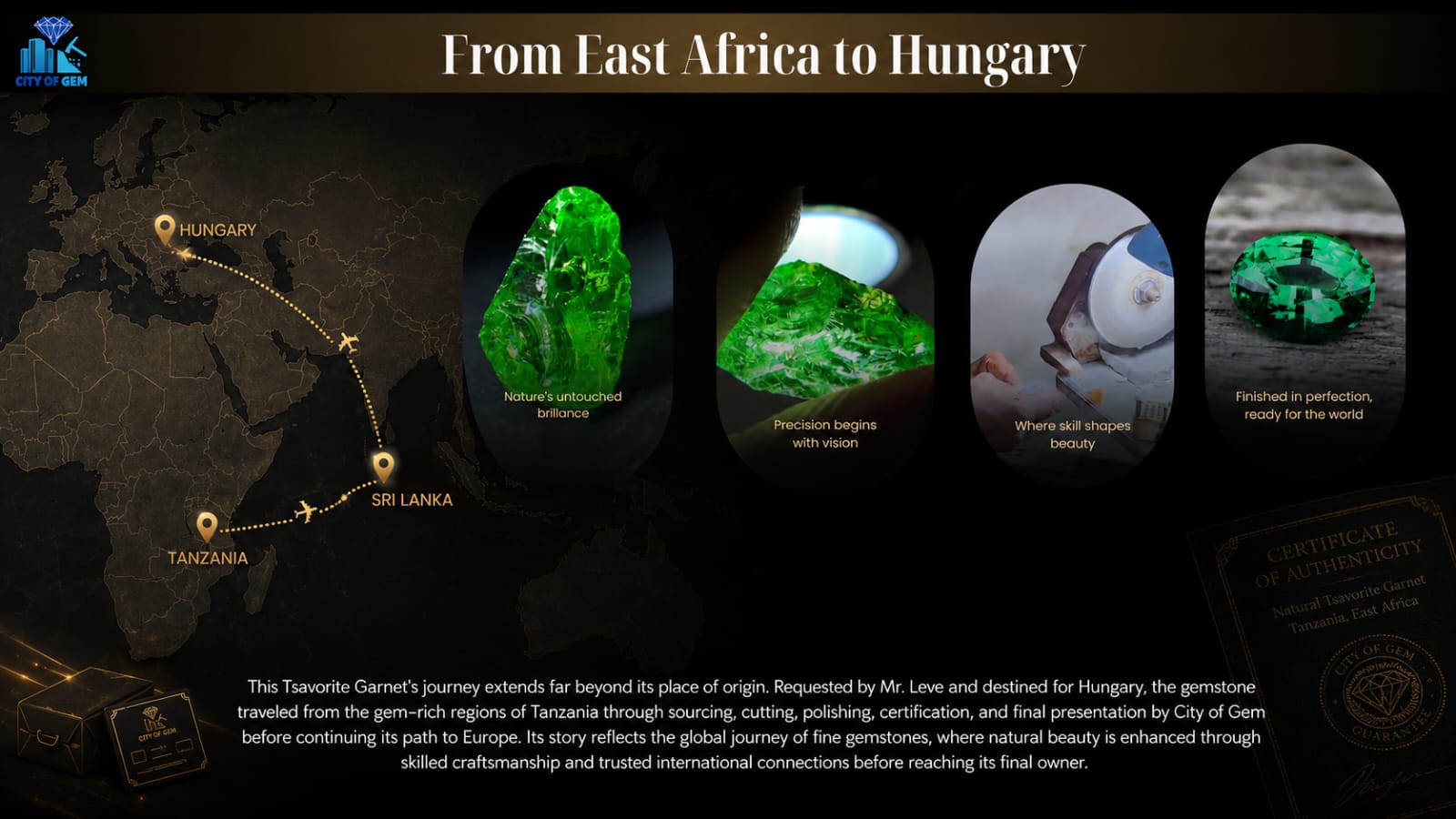
This piece was requested by Mr. Leve and is going to Hungary, which adds another meaningful layer to the story. A gemstone that began as rough in East Africa moved through sourcing, planning, shaping, polishing, certification, and final presentation through City of Gem before continuing its journey to Europe. That is the real life of many fine gemstones today. They are not only bought and sold as finished objects. They move through trusted hands, technical decisions, and international relationships before becoming part of a personal collection or jewelry design.
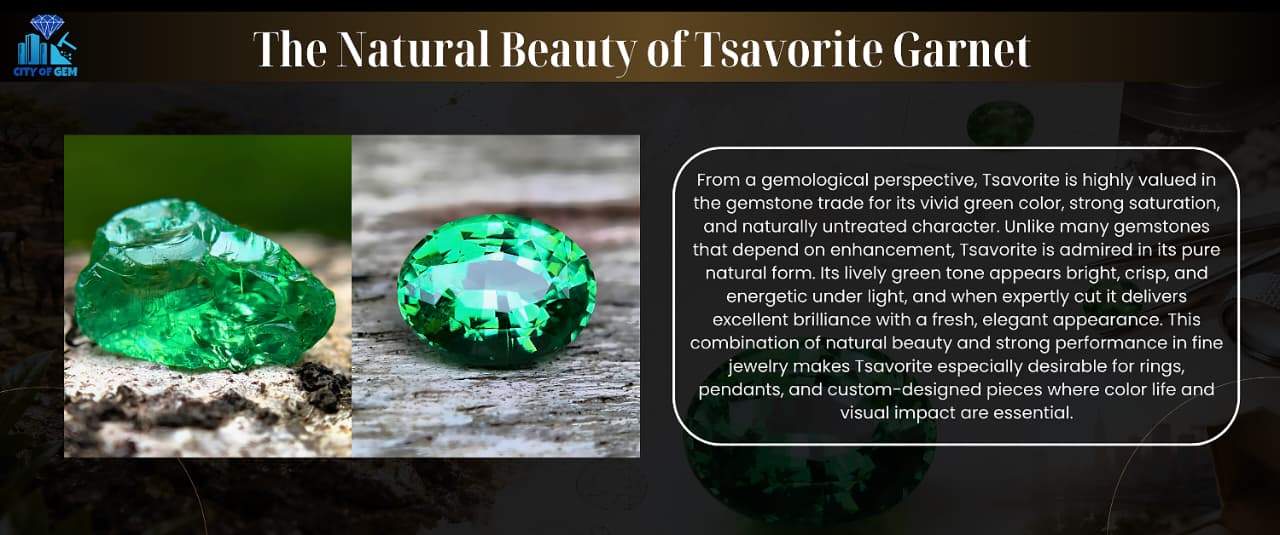
From a gemological perspective, Tsavorite is one of the most appreciated green garnets in the trade because of its lively brilliance, strong saturation, and untreated natural appeal. Unlike many gems that rely heavily on treatment discussion, Tsavorite is admired for what it naturally offers. Its green character often appears vivid, crisp, and energetic under light, and when cut well, the stone can show excellent brightness with a fresh, elegant look. That makes it especially suited for fine jewelry where color must remain lively without becoming too dark.
This transformation also reflects the working identity of City of Gem. The rough stone was sourced by City of Gem, shaped through its cutting process, and brought to finished form with professional lapidary handling. That full journey matters. It means the value of the final stone is not only in the certificate or final carat weight, but in the knowledge applied at every stage. For gemstone buyers, designers, and collectors, that traceable path from rough to polished gem creates a deeper connection to the stone.
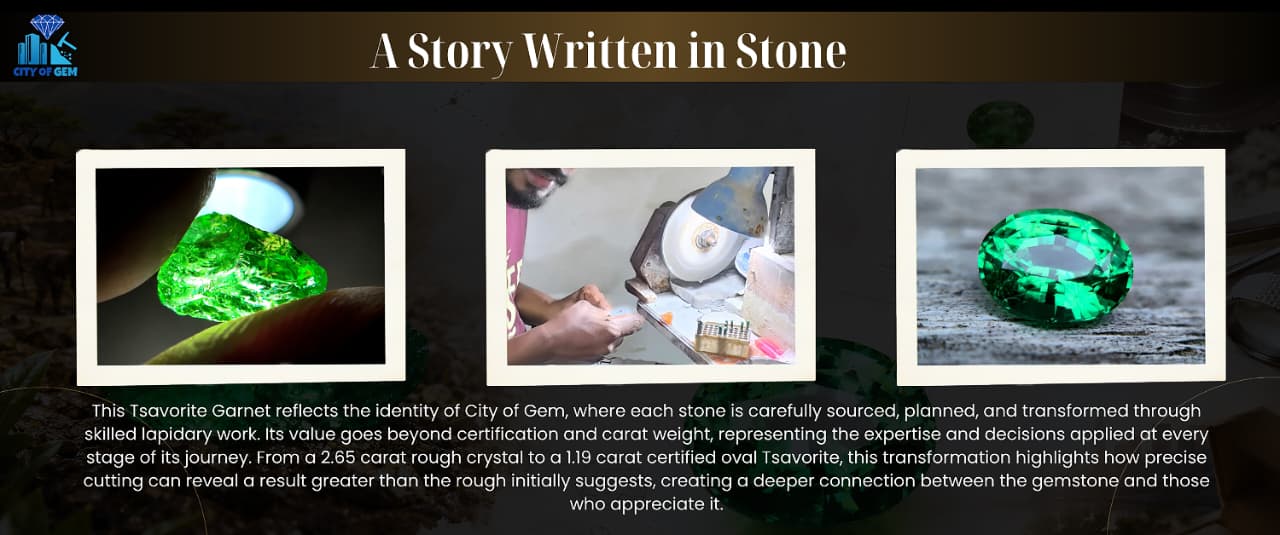
In the end, this Tsavorite is more than a finished oval gemstone. It is a record of decision-making, technical skill, and respect for natural material. A 2.65 carat natural facet-grade rough became a certified 1.19 carat untreated oval Tsavorite, proving that careful cutting can reveal a result better than the rough first suggests. For those who appreciate gemstones seriously, this is exactly the kind of transformation that makes fine colored stones so compelling.
FAQ
1. What was the original rough weight of this Tsavorite Garnet?
The original rough weighed 2.65 carats and was described as a natural facet-grade Tsavorite Garnet from Tanzania.
2. What is the finished weight of the cut gemstone?
The finished gemstone weighs 1.19 carats and was cut into an oval step cut shape.
3. Is this Tsavorite natural and untreated?
Yes. The stone is described as natural and unheated in rough form, and the CSL memo states treatment: none.
4. Who sourced the rough stone?
The rough stone was sourced by City of Gem.
5. Who cut the finished gemstone?
The gemstone was cut by Mr. Praveen.
6. What shape was the rough expected to produce at first?
The rough shape appeared more similar to a drop or pear-like direction, but it was successfully finished as an oval above one carat.
7. Why is the finished oval shape important?
An oval shape is highly desirable for jewelry because it offers a balanced appearance, good face-up spread, and versatility for rings, pendants, and custom designs.
8. What does the CSL certificate say?
The CSL memo identifies the gemstone as Tsavorite, species Grossularite Garnet, color green, shape oval, weight 1.19 ct, and treatment none.
9. Where is the rough stone from?
The rough originated from Tanzania, East Africa.
10. Where is this gemstone going after completion?
This piece was requested by Mr. Leve and is going to Hungary.